2026-11-05
Nasolabial Fold Lifting in Your 60s: Marionette Lines, Deep Cheek Sagging, and Results 6 Months After Jubgen
A woman in her mid-60s treated with Jubgen and mouth-corner Botox saw softened deep nasolabial and marionette wrinkles at six months. Causes and planning are also covered.
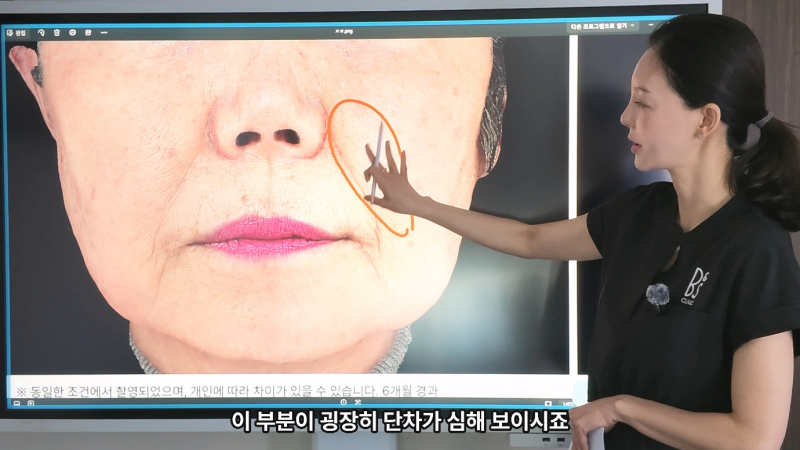
a. Nasolabial folds and marionette lines in your 60s can appear due to a combination of factors: not only reduced skin elasticity, but also sagging fat, loss of volume, and changes in the facial support structure.
b. For a female patient in her mid-60s, we performed Jubgen treatment on the nasolabial fold and marionette line areas along with Botox for the mouth corners. Six months later, the deep wrinkles were observed to have softened.
c. When considering nasolabial fold lifting, it is important to assess deep cheek sagging and volume changes in the surrounding tissue, and to build a treatment plan suited to each person's condition.
Hello, this is Park So-hyun, Chief Director at Samsung B&S Clinic.
Many people in their 60s are concerned as their nasolabial folds deepen and the marionette lines running down from the corners of the mouth become more pronounced.
These changes are not simply the result of skin losing elasticity. They can occur through a combination of factors, including the migration of facial fat, loss of volume, and changes in the tissue around bones and ligaments.
In particular, if the tissue above the nasolabial fold sags downward while the area inside the fold is relatively hollow, the height difference between the two areas can make the fold look even deeper.
Today, using the case of a woman in her mid-60s who visited us with concerns about her nasolabial folds and marionette lines, we will look at the causes of deepening wrinkles, her treatment plan, and her progress six months after Jubgen treatment.
1. Nasolabial Fold Lifting in Your 60s: Facial Conditions to Check First
This patient is a woman in her mid-60s, and it was her first visit to a dermatology clinic.
Her main concerns were the nasolabial folds running from the sides of the nose to the corners of the mouth, and the marionette lines forming below the mouth corners.
Before treatment, the height difference between the tissue above and below the nasolabial fold was fairly noticeable.
Above the nasolabial fold, there was relatively abundant fat that appeared to be sagging downward, while the area on the inner side of the fold beside the nose was, conversely, hollowed out.
When there is a step between protruding and hollowed areas like this, the skin can fold repeatedly with facial expressions, which may lead to deep lines.
So if you are considering nasolabial fold lifting in your 60s, it is important not to look only at how deep the wrinkle is, but also to check the distribution and degree of sagging of the surrounding fat and the condition of the hollowed areas.
2. Why Do Marionette Lines Deepen With Age?
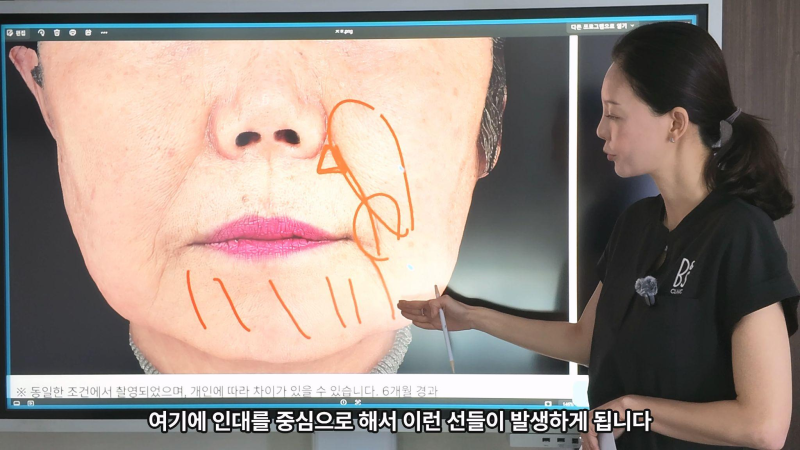
Marionette lines are the folds that run from the corners of the mouth toward the chin.
In this patient, we observed both the distribution of fat around the mouth corners and a volume difference in the tissue below.
As we age, when part of the facial bone is resorbed, the structures that support the surrounding tissue can also change.
Add to this the migration of fat and decreased skin elasticity, and the folds and creases around the mouth can become more prominent.
In particular, the ligaments of the face help support the skin and surrounding tissue. When the position of fat and skin shifts, height differences form relative to the ligaments, and certain wrinkles can look deeper.
This patient also showed signs of tissue sagging across the whole face, not just in the marionette line area.
Even if some fat remains in the cheeks, reduced skin elasticity can cause the weight of the fat and the sagging of tissue to work together.
So when evaluating marionette lines, it is important to distinguish whether they are simply wrinkles at the mouth corners or whether they are accompanied by sagging and volume changes in the surrounding tissue.
3. Deep Cheek Sagging and Facial Volume Changes Should Also Be Checked

Facial aging is not just about wrinkles forming or skin thinning.
With age, some areas of the face lose volume, while in other areas fat and soft tissue can migrate downward and appear to bulge.
Typical examples of volume loss include the temple area, the area around the eyes, and the lateral cheeks.
Conversely, around the area above the nasolabial fold or the deep cheek, tissue can shift downward and sagging can become more noticeable.
When these changes occur alongside reduced skin elasticity, the following features may also be observed:
Sagging of tissue above the nasolabial fold; sagging of the deep cheek area; changes in the jawline contour; volume differences around the corners of the mouth
In addition to the nasolabial folds and marionette lines, this patient also showed deep cheek sagging and changes in the contour of the jawline.
However, the presence of deep cheek sagging does not mean that everyone needs the same lifting procedure.
The treatment direction should be decided only after comprehensively assessing where the wrinkles form, the structure of the surrounding tissue, and the skin's elasticity and volume distribution.
4. Facial Aging in Your 60s Also Shows Up in the Philtrum, Lips, and Chin
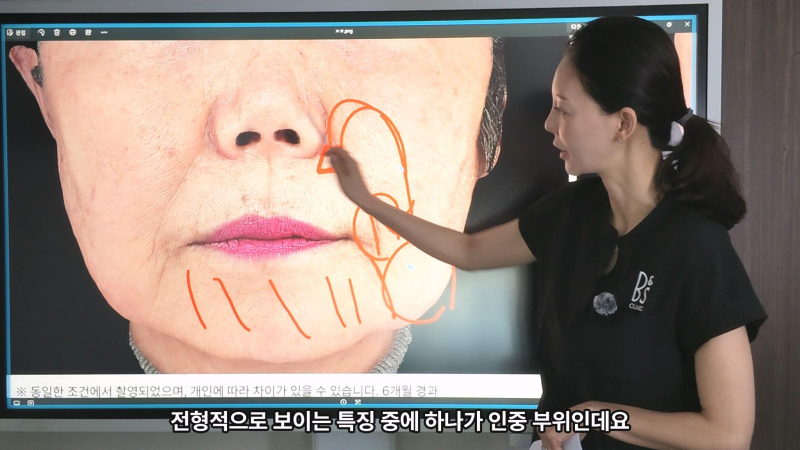
Facial aging does not appear only in the nasolabial folds or cheeks.
With age, the three-dimensional shape around the philtrum can flatten, and the upper lip may appear to curl inward.
As the volume of both the upper and lower lips decreases, the outline around the mouth can change, and fine vertical lines may form above the upper lip.
Similar changes occur around the chin.
As aging causes bone resorption and changes in fat tissue, the volume at the front of the chin and surrounding areas may decrease.
These changes are one of the factors that make the marionette lines running from the mouth corners to the chin look even more pronounced.
Also, when volume differences grow around the facial ligaments, the surface of the skin can show more distinct contours.
Therefore, when considering nasolabial fold lifting or marionette line treatment, it is necessary to evaluate volume changes in the philtrum, lips, and chin as well.
5. Jubgen Treatment Applied to Nasolabial Folds and Marionette Lines
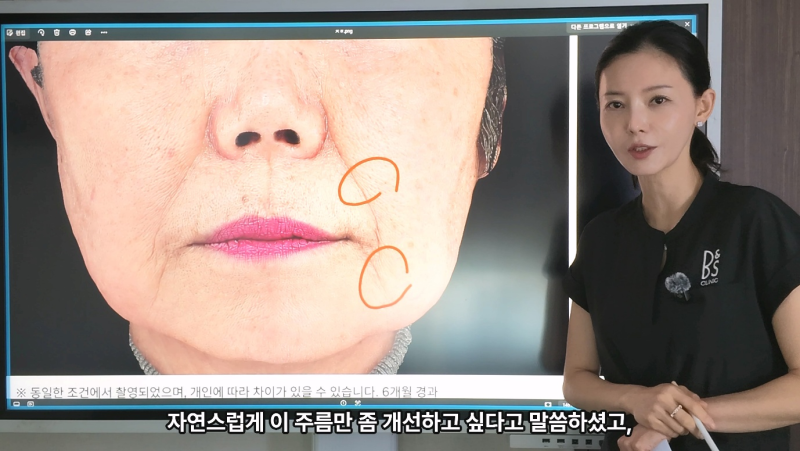
This patient in her mid-60s did not want a dramatic change to her whole face. Instead, she wished to naturally soften the wrinkles she had been concerned about.
Accordingly, after checking the condition of her nasolabial folds and marionette lines, we performed Jubgen treatment on those areas.
We also observed that her mouth corners drooped before treatment.
Because the position of the mouth corners and the movement of the surrounding muscles can also change with age, we also performed Botox treatment on the mouth corners to address this area.
This treatment was planned after assessing the nasolabial folds, marionette lines, and mouth corners, taking into account the scope of change the patient wanted.
Although sagging was also observed in the deep cheek area, rather than applying the same procedure across the entire face, we set the scope of treatment around the wrinkles that concerned the patient most.
Even within the same age group, facial fat distribution, skin elasticity, and the depth and cause of wrinkles can all differ.
So even when considering additional lifting after Jubgen treatment, the right approach should be determined only after checking the condition of the previously treated areas and the cause of any remaining sagging.
6. Six Months After Jubgen: Progress of Nasolabial Folds and Marionette Lines
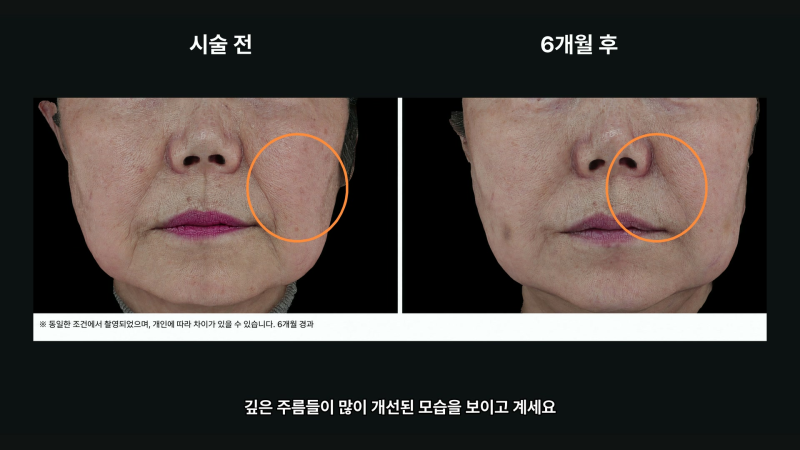
We checked her progress six months after Jubgen treatment.
Comparing photos taken before treatment and six months later, the deep wrinkles in the nasolabial fold and marionette line areas were observed to have softened compared with before.
However, not all of the wrinkles had disappeared.
Fine vertical lines above the upper lip and wrinkles below the chin were still present, and other tissue changes associated with facial aging were also observed.
This is because there is more than one cause behind wrinkle formation.
Even when treatment focuses on deep wrinkles in specific areas, reduced skin elasticity, fat sagging, and volume loss in the surrounding tissue do not all change to the same extent.
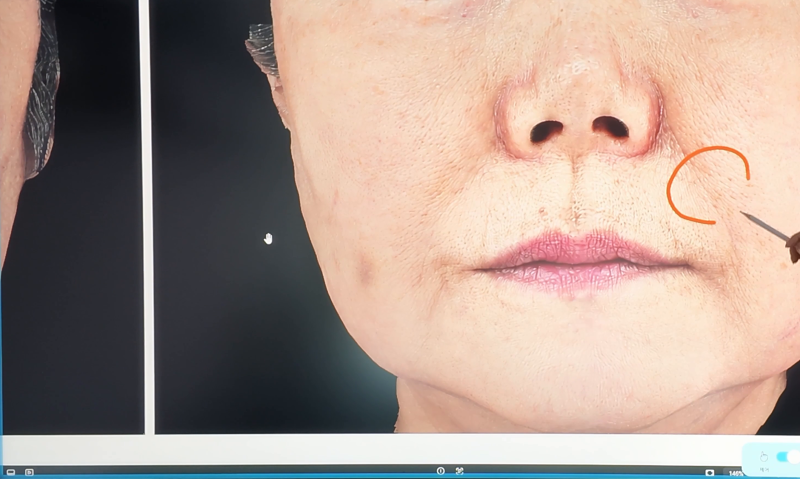
This patient was treated mainly for the nasolabial folds and marionette lines she had been most concerned about, and changes in these areas were visible in the six-month progress photos.
However, this outcome was observed in just one patient.
The degree of change and how long results last after treatment can vary depending on individual skin condition, the characteristics of the wrinkles, and lifestyle habits.
So when deciding whether to consider lifting after Jubgen or whether additional treatment is needed, it is important to examine the remaining wrinkles and tissue condition on an individual basis.
7. Nasolabial Fold Lifting in Your 60s: A Personalized Treatment Plan Matters Most
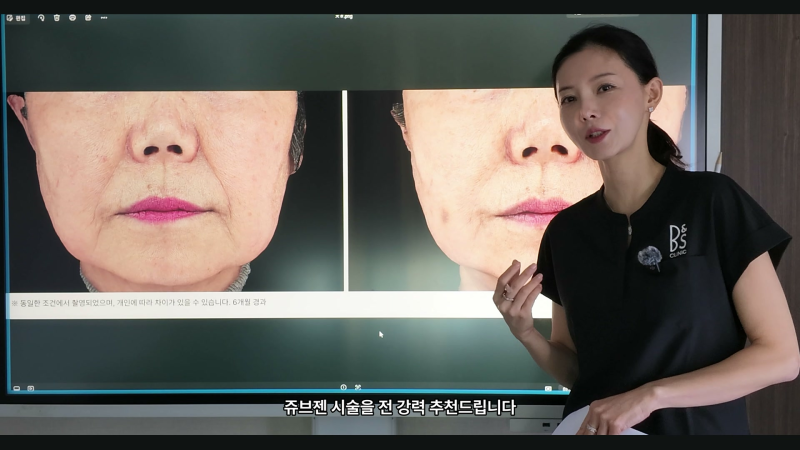
Nasolabial folds and marionette lines form not only from changes on the skin's surface, but also from a combination of changes in the facial fat layers, bones, ligaments, and surrounding tissue.
So rather than deciding on a treatment based only on how deep a wrinkle is, it is important to first identify what has caused that wrinkle to stand out.
This woman in her mid-60s wanted a natural change in her wrinkle areas, and the treatment scope was set to match that goal.
Not every facial change that comes with age needs to be corrected all at once.
It is important to consider which area is the biggest concern right now, how much sagging or hollowing accompanies that area, and how well it balances with the surrounding tissue.
When planning nasolabial fold lifting, checking deep cheek sagging and the condition of marionette lines together helps you understand the structure of the whole face.
Wrinkle treatments, including Jubgen, can vary in suitability and results depending on each person's condition, and side effects such as bruising, swelling, or pain may occur.
Therefore, it is important to decide on a treatment plan that suits you through a thorough examination and consultation.
This was Park So-hyun, Chief Director of Samsung B&S Clinic.
For more details on the chief director's approach to care and the medical team, please visit the official blog below.
For a detailed explanation of changes in nasolabial folds and marionette lines in your 60s, the causes of deep cheek sagging, and progress six months after Jubgen treatment, please watch the original video below.
Frequently Asked Questions
Why do nasolabial folds form in your 60s?
They can form from a combination of factors, including not only reduced skin elasticity but also sagging fat, loss of volume, and changes in the facial support structure. When the tissue above the nasolabial fold sags while the area beneath it is hollow, the height difference can make the fold look deeper.
Why do marionette lines deepen with age?
Partial resorption of the facial bone, fat migration, and reduced skin elasticity can work together to make the lines around the mouth more prominent. When the position of fat and skin shifts relative to the facial ligaments, height differences can form, making certain wrinkles look deeper.
What changes were seen six months after Jubgen treatment?
In the six-month progress photos, the deep wrinkles in the nasolabial fold and marionette line areas were observed to have softened compared with before. However, not all wrinkles disappeared: fine vertical lines above the upper lip and wrinkles below the chin remained. This outcome was observed in one patient.
What treatments were performed together in this case?
Jubgen was administered to the nasolabial folds and marionette lines. Because the mouth corners were drooping before treatment, Botox was also administered to the mouth corners. Rather than applying the same treatment across the entire face, the scope of treatment was determined around the wrinkles the patient was most concerned about.
Does everyone with deep cheek sagging need lifting?
No. Deep cheek sagging does not mean that everyone needs the same lifting procedure. The treatment direction should be determined after comprehensively checking where the wrinkles are, the structure of the surrounding tissue, and the skin's elasticity and volume distribution.
What should be checked before nasolabial fold lifting?
Beyond how deep the wrinkle is, check the distribution and degree of sagging of the surrounding fat and the condition of any hollowed areas. Jubgen and other wrinkle treatments can cause side effects such as bruising, swelling, or pain, so a thorough examination and consultation are important.