2026-10-07
Mint Thread Lifting Explored with US Medical Practitioners: From Design to Aftercare
A US medical team visited Samsung BNS Clinic to review Mint Thread lifting design, thread selection criteria, procedure steps, and aftercare for swelling and bruising.
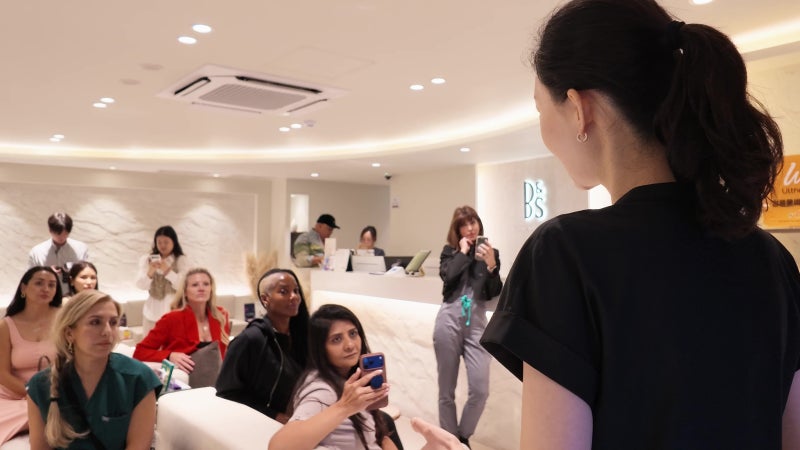
a. US medical practitioners who perform thread lifting visited Samsung BNS Clinic to review thread lifting design, thread selection criteria, and the procedure process together.
b. We discussed the 360-degree cog structure of Mint Thread lifting, design based on facial condition, and the criteria considered during the procedure.
c. We explained thread lifting aftercare in line with actual clinical practice, including swelling and bruising that may occur after the procedure.
1. Thread Lifting Process Reviewed with US Medical Practitioners
Hello, I am Park So-hyun, Director of Samsung BNS Clinic.
On September 16, 2026, medical practitioners who perform thread lifting in the United States visited Samsung BNS Clinic in Gangnam, Seoul. This US medical team visit was hosted by Mint Thread. It covered everything from the design and thread selection criteria I check in actual clinical practice to the procedure process and thread lifting aftercare.
Thread lifting is not a procedure defined simply by the act of inserting threads. We first assess the structure of the face, skin condition, and the desired outcome, and then plan the design, the type of thread, and the direction of insertion. During the visit, the questions focused not only on which threads are used, but also on how the decision criteria differ from patient to patient.
2. What Criteria Do We Consider When Selecting Threads?
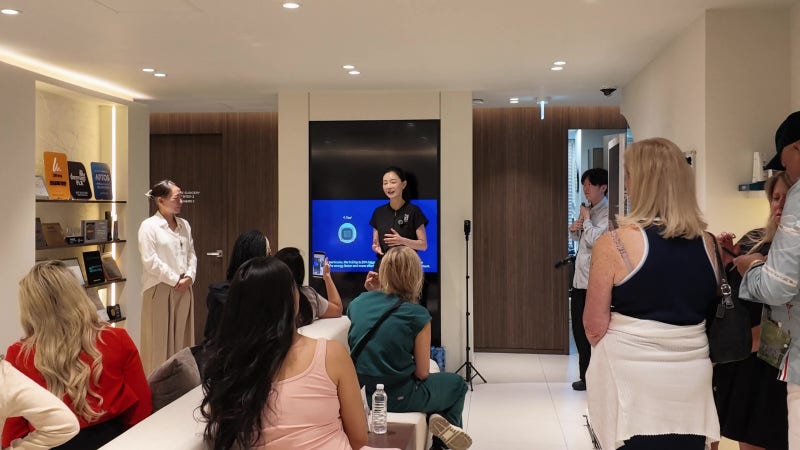
When planning thread lifting, we check not only the material and structure of the thread, but also the patient's skin condition and facial shape. Threads have different characteristics depending on the product and structure, so rather than applying the same approach to every patient, it is necessary to choose based on the current condition and the desired change.
During consultation, we review the outcome the patient hopes for, their skin condition, and facial movement, and we also take various factors into account, including cost. Likewise, with Mint Thread lifting, it is important not to focus only on the product itself, but to determine which design and approach to apply to which face.
3. Why We Explained the 360-Degree Cog Structure of Mint Thread
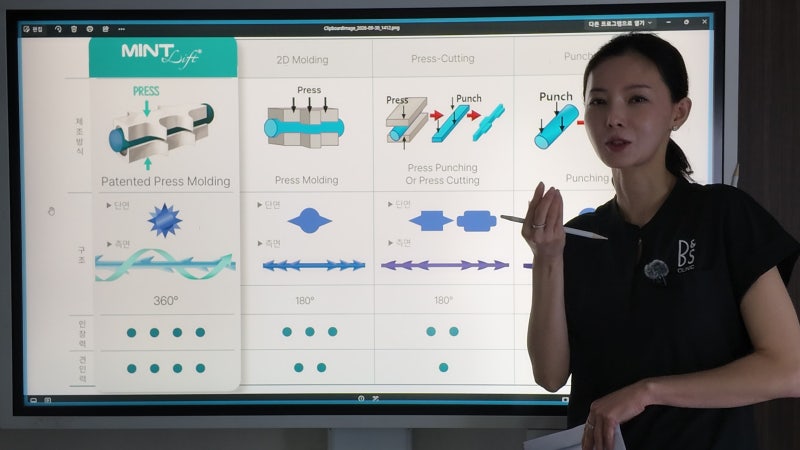
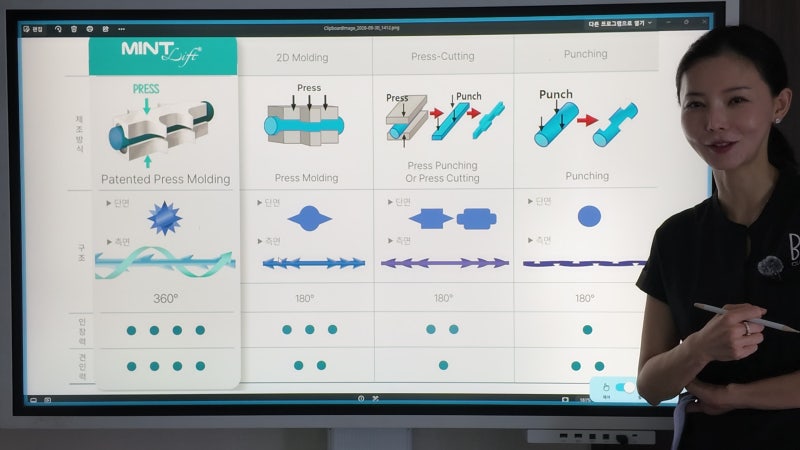
On site, we used an electronic whiteboard to compare the 360-degree projection structure of Mint Thread with the 2D structure found in conventional threads.
Cogs, the protrusions on the surface of the thread, are related to supporting tissue. The face is not flat but three-dimensional, and it is an area where expressions and daily movements repeat, so we also need to consider from which direction the tissue should be supported.
We also reviewed with the medical team how the structure formed in 360 degrees makes contact with tissue, and the principle by which force is transmitted at multiple points. Understanding thread structure is one of several factors considered when planning thread lifting.
4. How Is Thread Lifting Design Determined?

Before the procedure, we first look into a mirror with the patient to confirm the change they want. We then observe the movement of the skin and soft tissue and directly check from which position and in which direction pulling produces a visible change.
On this day, the US medical team also observed this design process up close. As I explained the positions and directions, we reviewed how the skin moves together. I also explained that design and thread selection are not separate steps but must be judged in connection with each other.
When looking into a dermatology clinic near Samsung Station or thread lifting procedures, it is important to check not only the type of thread but also how the current facial condition is analyzed and designed.
5. Medical Practitioners Observe a Thread Lifting Demonstration up Close
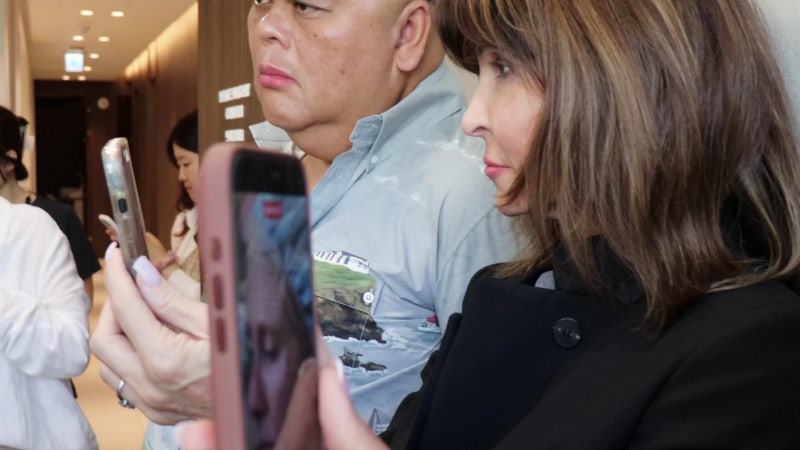
After completing the design, we moved on to observing the actual procedure. The visiting medical practitioners closely observed the operator's hand movements and the process of thread placement, and recorded the relevant details.
Questions also arose on site about how the design can vary depending on facial shape, what is considered to reduce pain during the procedure, and what should be checked with regard to maintenance over time.
This was a clinical exchange focused not simply on confirming a set procedure sequence, but on the reasoning behind each decision at every step.
6. Key Points We Focus on During the Procedure
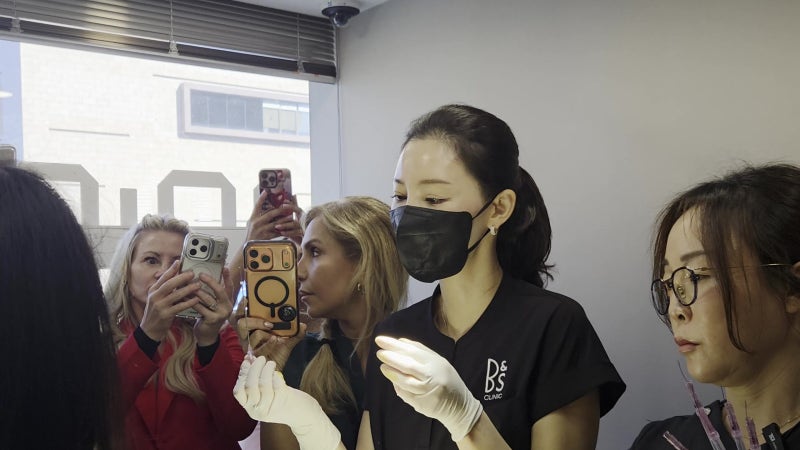
In thread lifting, we consider not only where the thread is inserted but also its depth and direction. Because the thickness of the skin and soft tissue and the anatomical structure differ from one area of the face to another, we do not apply the same method to every area.
The US medical practitioners asked how the procedure is adjusted according to skin thickness and what criteria are used to determine the depth or direction of thread passage.
I explained based on facial anatomy and what we check during clinical practice. Rather than presenting one technique as the correct answer, the goal was to share which factors we check and how we adjust the plan according to each patient's facial condition.
7. Thread Lifting Aftercare: How Should Swelling and Bruising Be Managed?
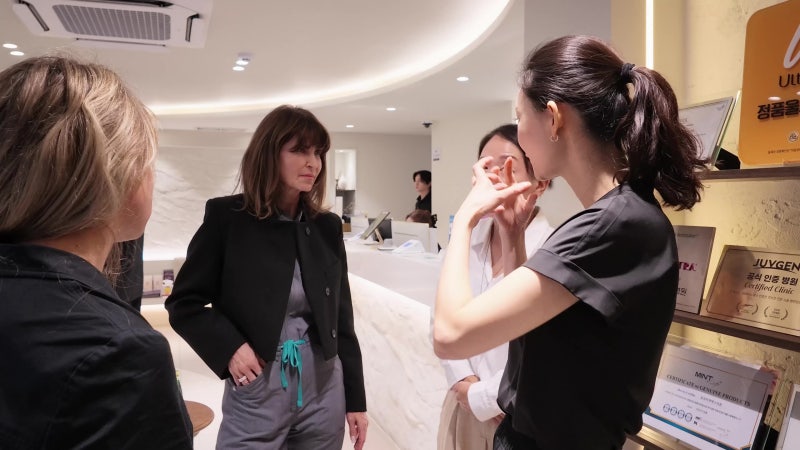
After thread lifting, swelling or bruising may appear for a certain period depending on the individual. These changes can vary in severity and duration depending on skin condition and the extent of the procedure, so guidance before and after treatment is necessary.
At this session, we also explained care methods that can be used during recovery, including cold compresses, ultrasound care, and lifting bands. However, care methods and whether they apply can differ depending on the individual's condition, so it is important to follow the guidance of your medical team.
We advise patients to avoid pressing or rubbing the treated area and to avoid strong massage on their own. With thread lifting, it is important to understand not only the procedure itself but also the aftercare that follows.
8. Clinical Discussion Continued After the Demonstration
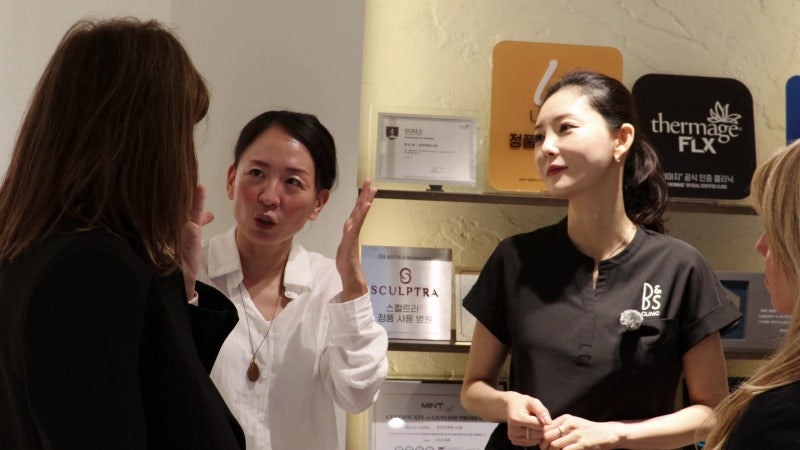
Even after the procedure demonstration ended, questions and conversation with the US medical practitioners continued. We revisited facial structure and the principles of thread lifting, and also shared perspectives on the various situations each of us has encountered in clinical practice.
Even when performing the same thread lifting, no two patients will have identical skin conditions, facial shapes, or desired outcomes. Practitioners may also have different considerations about which aspects to assess first and which criteria to use when choosing the design and threads.
In this clinical exchange, rather than one-sidedly presenting a specific method, the focus was on reviewing each decision criterion and the reasoning behind it together.
9. Clinical Exchange: Sharing Experiences with US Medical Practitioners

During this US medical team visit, we reviewed the process as one continuous flow, starting from consultation and design, through thread selection and the procedure, to thread lifting aftercare.
The US medical practitioners asked about what they wanted to know on site, and I explained the factors I consider important in clinical practice, allowing us to share our clinical experiences.
Although the countries and clinical environments differ, we also confirmed that we share common concerns about how to assess each patient's facial condition and how to build the most appropriate plan. I would like to thank the medical practitioners who shared their clinical experience by asking questions and taking notes together.
10. Building a Thread Lifting Plan Tailored to Each Patient's Face
When planning thread lifting, we do not decide simply which thread to use. We look together at the current condition of the skin and soft tissue, what direction of change is needed, and which design and thread selection is appropriate accordingly.
The way Mint Thread lifting and other thread lifting methods are applied can also vary depending on the patient's facial condition and treatment plan. The questions raised in this clinical exchange ultimately came back to how to build the treatment plan a patient needs.
Samsung BNS Clinic will continue to explore clinical questions related to our practice, so that we can thoroughly assess each person's facial structure and individual condition and build appropriate treatment plans based on diagnosis and design.
Park So-hyun, Director, Samsung BNS Clinic
Director's Official Blog
You can also view the design, Mint Thread structure, procedure, and aftercare discussed with the US medical team in the original video below.
Frequently Asked Questions
What are the characteristics of the 360-degree cog structure in Mint Thread lifting?
Mint Thread features a structure with cogs (protrusions) formed in 360 degrees on the thread surface. It was explained in comparison with the two-dimensional structure of conventional threads, and cogs were described as the part associated with supporting tissue.
What criteria are used to select thread lifting threads?
Threads are selected by reviewing the material and structure, the patient's skin condition, facial shape, and desired outcome together. Rather than applying the same approach to every patient, the choice is tailored to the current condition, and various factors, including cost, are also considered during consultation.
How is thread lifting design determined?
Before the procedure, we look into a mirror to confirm the change the patient wants, then examine the direction in which the skin and soft tissue move to determine the position and direction. It was explained that design and thread selection should be judged together rather than as separate steps.
How should swelling and bruising be managed after thread lifting?
Cold compresses, ultrasound care, and lifting bands can be used, but the method and whether it applies depend on individual condition, so it is necessary to follow the guidance of your medical team. Patients are advised to avoid pressing or rubbing the treated area firmly.
What was the purpose of the US medical team visit?
On September 16, 2026, thread lifting practitioners from the United States visited Samsung BNS Clinic in Gangnam, Seoul, in an event hosted by Mint Thread. The format involved reviewing thread lifting design, thread selection criteria, the procedure, and aftercare in line with actual clinical practice.
Does the thread lifting plan differ by facial area?
Yes. Because the thickness of the skin and soft tissue and the anatomical structure vary across facial areas, the same method is not applied to every area. Not only the insertion point but also the depth and direction are considered.