2026-11-19
Why We Chose Jubgen Over Nasolabial Filler for a Woman in Her 40s, and Jaembeosil for Under-Eye Fine Lines
A case study of a woman in her 40s with under-eye hollowing, fine lines, and nasolabial folds, explaining why Jubgen was chosen over filler and how Jaembeosil was applied under the eyes.
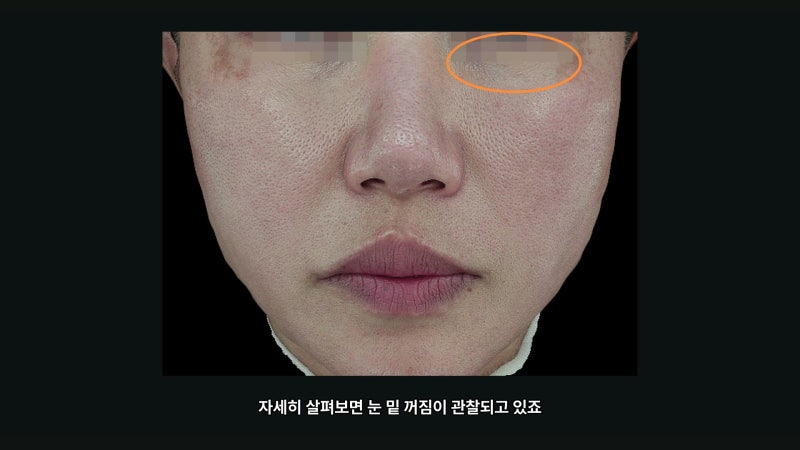
a. Under-eye hollowing, under-eye fine lines, and nasolabial folds in women in their 40s require evaluation not only of the skin but also of changes in fat and surrounding tissue.
b. Considering her past nasolabial filler experience and skin condition, we applied Jubgen to the nasolabial folds and Jaembeosil under the eyes.
c. Changes observed immediately after treatment may differ from long-term outcomes, and recovery time and the occurrence of side effects also vary from person to person.
Hello, this is Dr. Park So-hyun, Chief Director of Samsung B&S Clinic.
Many people in their 40s notice that the area under their eyes looks more hollow than before, or that their nasolabial folds are starting to bother them.
When the under-eye area looks dark, it is easy to first think of dark circles or pigmentation. In reality, however, shadows caused by volume loss under the eyes or fine lines on the skin surface can also be the cause.
Changes like these are difficult to identify accurately by looking only at the surface of the skin.
Today, using the case of a woman in her 40s who was concerned about under-eye fine lines and nasolabial folds, I will explain why we considered Jubgen instead of a conventional nasolabial filler, and how we applied Jaembeosil under the eyes.
1. A Woman in Her 40s Concerned About Under-Eye Fine Lines and Nasolabial Folds
The patient featured this time is a woman in her 40s who visited the clinic because her under-eye area looked dull and her nasolabial folds were bothering her.
When we examined the under-eye area, we observed a sunken section where volume beneath the skin was lacking. At the same time, small fine lines were also visible on the skin surface.
The skin under the eyes is thin, so changes in the underlying tissue tend to show up on the surface relatively easily.
In particular, when volume is lost, a height difference forms relative to the surrounding skin, and this can create shadows that make the area look darker than the actual skin tone.
In cases like this, it is more important to check both the cause of the under-eye hollowing and the condition of the fine lines than to simply try to brighten the skin tone.
The patient also wanted a treatment that addressed both the hollowed area under the eyes and the fine lines.
2. Why the Under-Eye Area Hollows with Age
Under-eye hollowing cannot be explained simply by the skin becoming
thinner or losing elasticity.
Changes in the bones, fat, and soft tissue around the eyes that occur with aging also play a role.
The bone that surrounds the eye is called the orbital bone.
As aging progresses, the structure of the facial bones, including the orbital bone, can change, and the environment that supports the surrounding tissue can also shift.
The same goes for the fat and soft tissue around the eyes.
In some areas, volume decreases, while in others, tissue sags downward or protrudes, which can change the contours of the face.
In materials that explain facial changes with aging, brown areas are generally marked as regions where volume decreases, and blue areas as regions where tissue sags or protrudes.
Under the eyes, these changes often occur together, which can deepen the tear trough and create a hollow or sunken look.
Therefore, when the under-eye area looks dark, it should be evaluated not only for pigmentation but also for fat distribution, volume loss, and tissue sagging.
3. Why Different Treatments Were Planned for the Under-Eyes and Nasolabial Folds
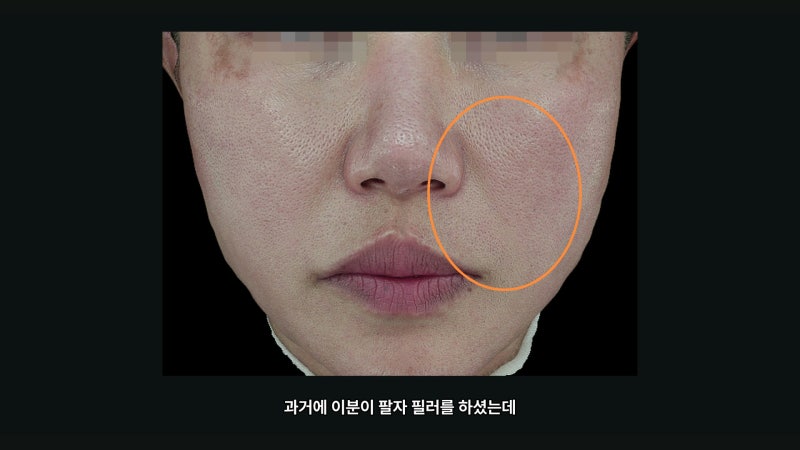
This patient in her 40s had two concerns: under-eye hollowing and nasolabial folds.
However, we did not consider it appropriate to apply the same method to both areas.
First, under the eyes, volume loss and fine lines were observed together.
Because this is an area of thin skin, we had to consider not only how to fill the hollowed space, but also skin thickness and tissue condition.
In contrast, the nasolabial folds were not especially deep or severe.
A standard nasolabial filler treatment was an option, but the patient had previously received filler in the nasolabial area.
She told us that at the time she did not notice the change she had hoped for, and her satisfaction was also not high.
Based on this previous treatment experience, we discussed in detail the natural-looking results and the duration of results that the patient wanted this time.
As a result, we planned to apply Jaembeosil under the eyes and Jubgen to the nasolabial folds.
This choice was not made because one treatment is always superior to another, but because we considered the tissue condition of each area and the patient's previous treatment experience.
4. Why We Chose Jubgen Over Nasolabial Filler
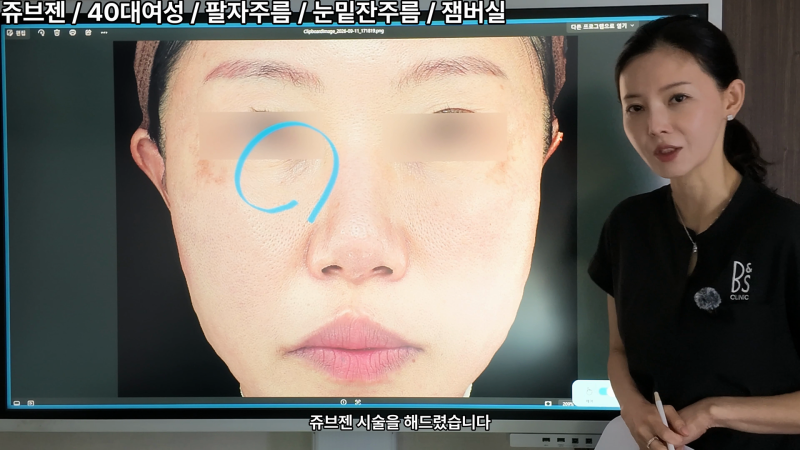
Nasolabial folds are not caused by surface wrinkles alone.
Changes in volume of the surrounding fat and soft tissue, along with declining skin elasticity, can all contribute together.
In this patient's case, the nasolabial folds were not severe, but her satisfaction with her previous nasolabial filler treatment was low.
Therefore, after reviewing her previous filler experience and assessing the degree of depression in the nasolabial area and her skin condition, we chose Jubgen.
Jubgen is a treatment applied with consideration of the tissue condition of areas where wrinkles or depressions appear.
Because its method of application differs from filler, it is difficult to simply say that one treatment is better than the other.
Nasolabial filler is suitable in some cases, while other approaches should be considered in others.
In particular, just because a patient was not satisfied with a previous filler treatment does not necessarily mean the wrinkles remain for the same reason.
When planning treatment, it is important to comprehensively assess the depth of the nasolabial folds, the cause of the depression, skin condition, and previous treatment history.
5. Why Jaembeosil Was Applied to Under-Eye Fine Lines and Hollowing

The under-eye area is one of the thinnest-skinned areas of the face.
Therefore, when adding volume, skin thickness, insertion site, and the condition of the surrounding tissue must be carefully evaluated.
When the skin is very thin, methods other than filler may be considered, and in this case, we applied Jaembeosil.
Jaembeosil is a relatively short thread manufactured in a spring shape.
It is wound around a cannula, the thin tube used during the procedure, and its base material is PDO (polydioxanone).
PDO is also used in absorbable surgical sutures, and it has the property of breaking down and being absorbed by the body over time.
Using this material and structure, it can be applied to hollowed areas under the eyes.
However, being an absorbable material does not mean it is safe for every patient or free of side effects.
Skin thickness, thread insertion site, and tissue condition must be considered, and the possibility of side effects such as nodules or foreign body reactions must also be checked.
6. The Relationship Between Jaembeosil and Collagen Production
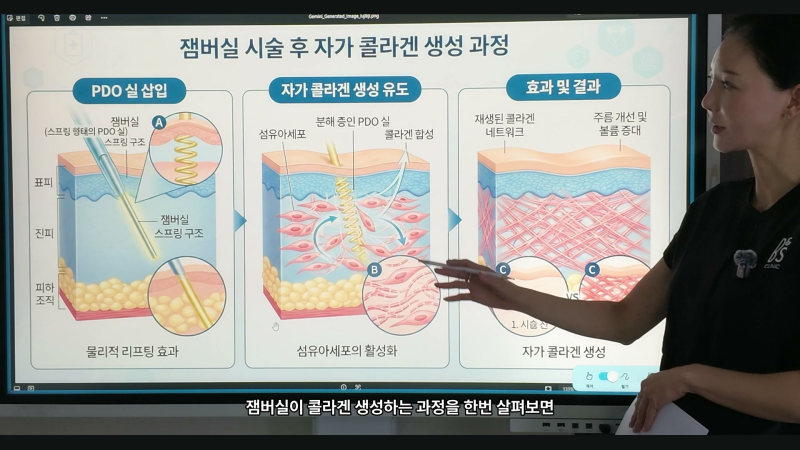
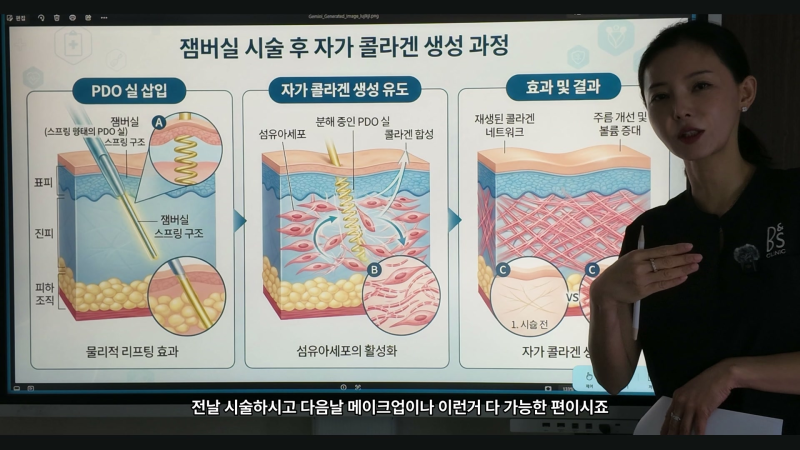
Jaembeosil works differently from simply filling in lost volume with the bulk of the thread itself.
First, we assess the extent of the under-eye hollowing and the skin condition, then plan where the thread will be inserted.
Next, the spring-shaped thread is inserted at the planned sites.
Once the thread settles within the skin tissue, it may stimulate the surrounding tissue and promote the activity of fibroblasts, which are involved in collagen production.
Fibroblasts are cells that produce the structural components of connective tissue, including the collagen in the skin.
Through this tissue response, collagen production may be induced over time, and changes may appear in under-eye volume and surface fine lines.
Tissue changes that may appear over one to two months after treatment are generally described, but the degree and timing of the actual response vary from patient to patient.
Therefore, the appearance right after Jaembeosil treatment and the changes seen after time has passed should not be judged the same way.
For cases where under-eye hollowing and fine lines occur together, this mechanism can be considered as one of the treatment options.
7. Bruising, Swelling, and Recovery After Jaembeosil Treatment?
Many people considering under-eye treatment ask not only about the procedure itself but also about the recovery process afterward.
In particular, many want to know how long bruising or swelling lasts, and whether they can wear makeup or resume their daily routine the next day.
Jaembeosil can be applied to a relatively small area, but reactions after treatment cannot be predicted identically for every patient.
After treatment, temporary bruising, swelling, pain, and a sensation of a foreign body may occur.
Recovery time also varies depending on skin condition and the extent of treatment.
In some cases, the possibility of side effects such as nodules or foreign body reactions should also be considered.
Whether it is appropriate to wear makeup or return to normal daily activities the day after treatment should be decided after checking the actual state of recovery.
Because the under-eye skin is thin and sensitive, planning should cover not only whether to treat but also the insertion site and depth of the thread, as well as post-treatment care.
8. Changes Observed Under the Eyes Immediately After Treatment
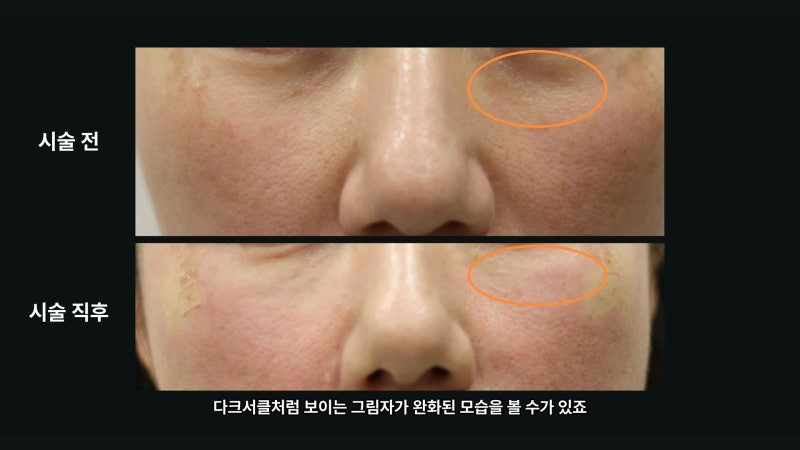
In the patient's pre-treatment photos, the sunken area under the eyes and the shadow it created were visible.
The contour under the eyes also made the area look dark, similar to dark circles.
In photos taken right after treatment, the contour under the eyes had changed compared with before, and the dark shadow appeared relatively less prominent.
However, there is an important point here.
These photos do not show long-term follow-up results; they document the condition immediately after treatment.
Right after treatment, temporary swelling or reactions in the surrounding tissue can affect appearance.
Therefore, it is difficult to judge long-term results or how long they will last from photos alone.
Because Jaembeosil is a treatment that aims for tissue changes related to collagen production over time, it is important to monitor how under-eye volume and fine lines change afterward.
In particular, changes that may appear one to two months later vary from person to person, so the actual progress needs to be checked.
9. What We Observed After Applying Jubgen to the Nasolabial Folds
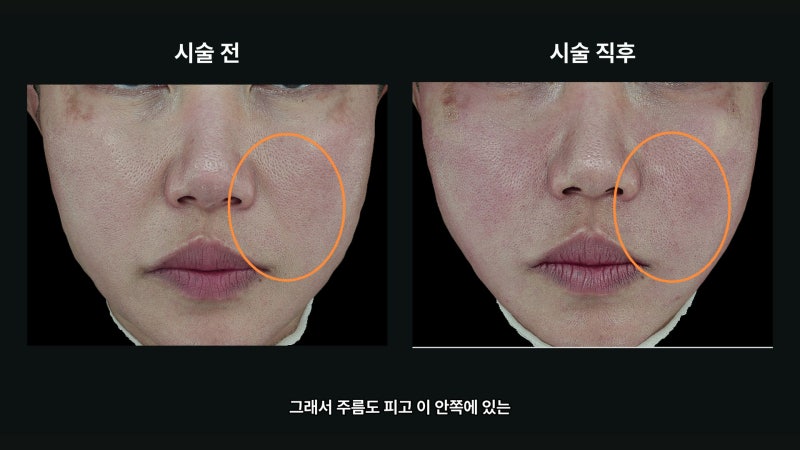
In this case involving a woman in her 40s, Jubgen was applied to the nasolabial area.
No additional nasolabial filler was used; instead, both the wrinkles and the depression in the nasolabial area were addressed with Jubgen.
In photos taken after treatment, the nasolabial folds and the inward-sunken area appeared less pronounced than before treatment.
However, such changes in appearance do not occur identically in every patient.
This is because nasolabial folds are influenced not only by skin elasticity but also by changes in fat and the surrounding soft tissue.
Even among women in their 40s, the appropriate treatment plan can differ depending on skin thickness, wrinkle depth, and previous treatment history.
In this case, Jaembeosil was applied under the eyes and Jubgen to the nasolabial folds.
Treatment methods were differentiated based on the condition of each area.
If you are concerned about under-eye fine lines and nasolabial folds at the same time, it is important to first assess the cause and tissue condition of each area rather than deciding based on a single treatment.
It is also important to keep in mind that changes after treatment, the recovery process, and the likelihood of side effects all vary from person to person.
This was Dr. Park So-hyun, Chief Director of Samsung B&S Clinic.
You can find information on our treatment approach to under-eye hollowing and nasolabial folds, as well as introductions to our medical staff and related information.
You can view the original video for a closer look at the under-eye hollowing, under-eye fine lines, and nasolabial folds of a woman in her 40s, and the reasons for applying Jaembeosil and Jubgen respectively.
Frequently Asked Questions
Why was Jubgen chosen instead of nasolabial filler?
Jubgen was chosen in consideration of the low satisfaction with a previous nasolabial filler treatment. The decision was made after assessing the degree of depression in the nasolabial area and skin condition, and it is explained that the application method differs from filler.
Why does the under-eye area look hollow?
Changes in the bones, fat, and soft tissue around the eyes with age can contribute. It cannot be explained simply by thinning or loss of elasticity in the skin. Some areas lose volume while others sag or protrude, which can deepen the tear trough or make the eyes look hollow.
What is Jaembeosil?
Jaembeosil is a relatively short thread manufactured in a spring shape, and its base material is PDO (polydioxanone). PDO is also used in absorbable surgical sutures and breaks down and is absorbed by the body over time. However, even an absorbable material is not safe for every patient or free of side effects.
Can bruising and swelling occur after Jaembeosil treatment?
Yes, temporary bruising, swelling, pain, and a sensation of a foreign body may occur after treatment. Recovery time varies depending on skin condition and the extent of treatment, and the possibility of side effects such as nodules or foreign body reactions should also be considered.
When do the effects of Jaembeosil appear after treatment?
Generally, tissue changes may appear over one to two months after treatment, but the timing and degree vary from patient to patient. Long-term results and how long they last cannot be judged from photos taken immediately after treatment.