2026-11-20
Thermage FLX: How Radiofrequency Heat Works Under the Skin and Who It Suits
Thermage FLX uses radiofrequency heat to warm the dermis while cooling the skin surface. Changes build over 2 to 6 months, and suitability depends more on skin than age.







a. Thermage FLX is a radiofrequency device that broadly heats the dermis beneath the skin. The skin surface is cooled from inside the tip, and the heat reaches the thin membrane between the collagen-rich dermis and the fat layer beneath it. b. Collagen exposed to heat shrinks slightly right away, and new collagen is then formed during the healing process. The manufacturer says changes unfold over 2 to 6 months. The degree of change seen in studies was generally mild to moderate, and some people see little change. c. Whether it is right for you is determined by your skin, not your age. It is worth a consultation if you have wrinkles around the eyes or on the face and can track changes over several months.
Hello, I’m Dr. Sohyun Park, Director of Samsung BNS Clinic.
With Thermage, the months that follow matter more than the day of treatment itself, because collagen under the skin takes time to be heated and then rebuilt.

This is an illustrative image modeled on a marble sculpture. The soft glow inside the cheek represents radiofrequency heat warming a broad area beneath the skin.
1. Thermage Is a Device That Heats the Skin Beneath the Surface With Radiofrequency
Thermage FLX is a radiofrequency (RF) device manufactured by Solta Medical. The system consists of a main unit with a screen and a handpiece that is placed on the skin. A single-use tip is attached to the end of the handpiece.
In Korea, it is approved as a device for improving wrinkles around the eyes and on the face by coagulating tissue with radiofrequency current. Treatment is performed by placing the tip on the skin surface, without incisions or needles.
Samsung BNS Clinic also performs treatments with Thermage FLX.
2. How It Works — Cool the Surface, Broadly Heat the Layer Beneath
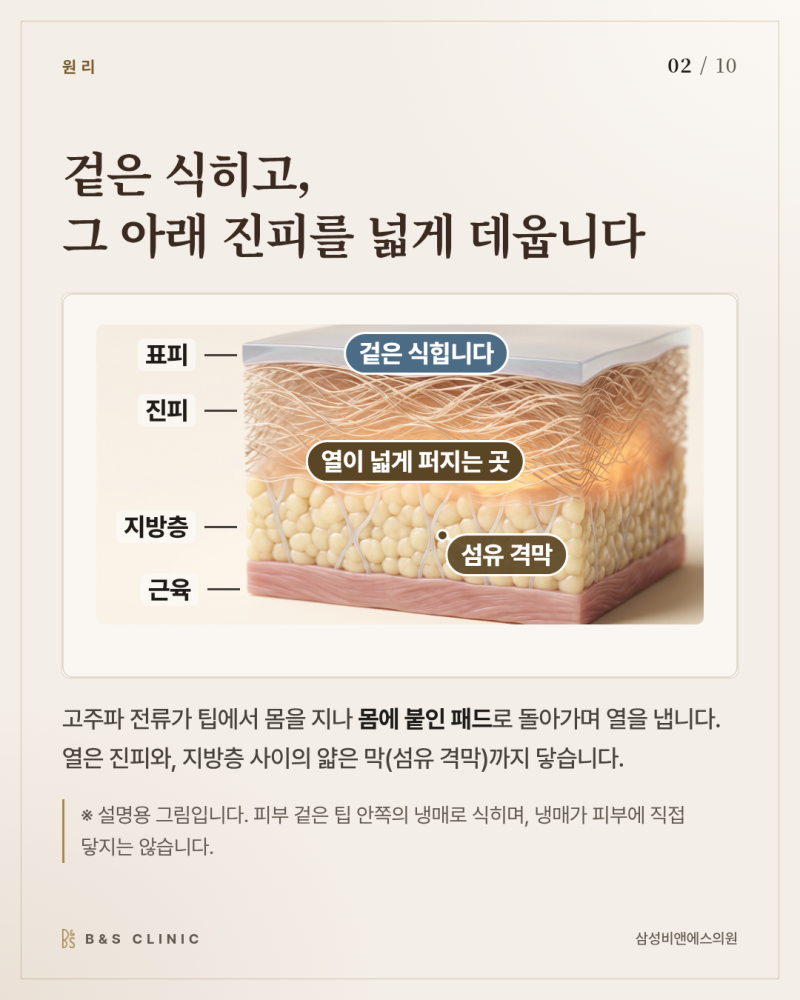
Before treatment, a thin pad is attached to the body. When the tip is placed on the skin, the radiofrequency current travels from the tip through the body and returns to this pad. As the current passes through, the tissue resists it and generates heat.
This heat is not concentrated at a single point. It spreads widely through the dermis beneath the skin and reaches the thin membrane (fibrous septa) between the fat layers below. The dermis is the layer rich in collagen.
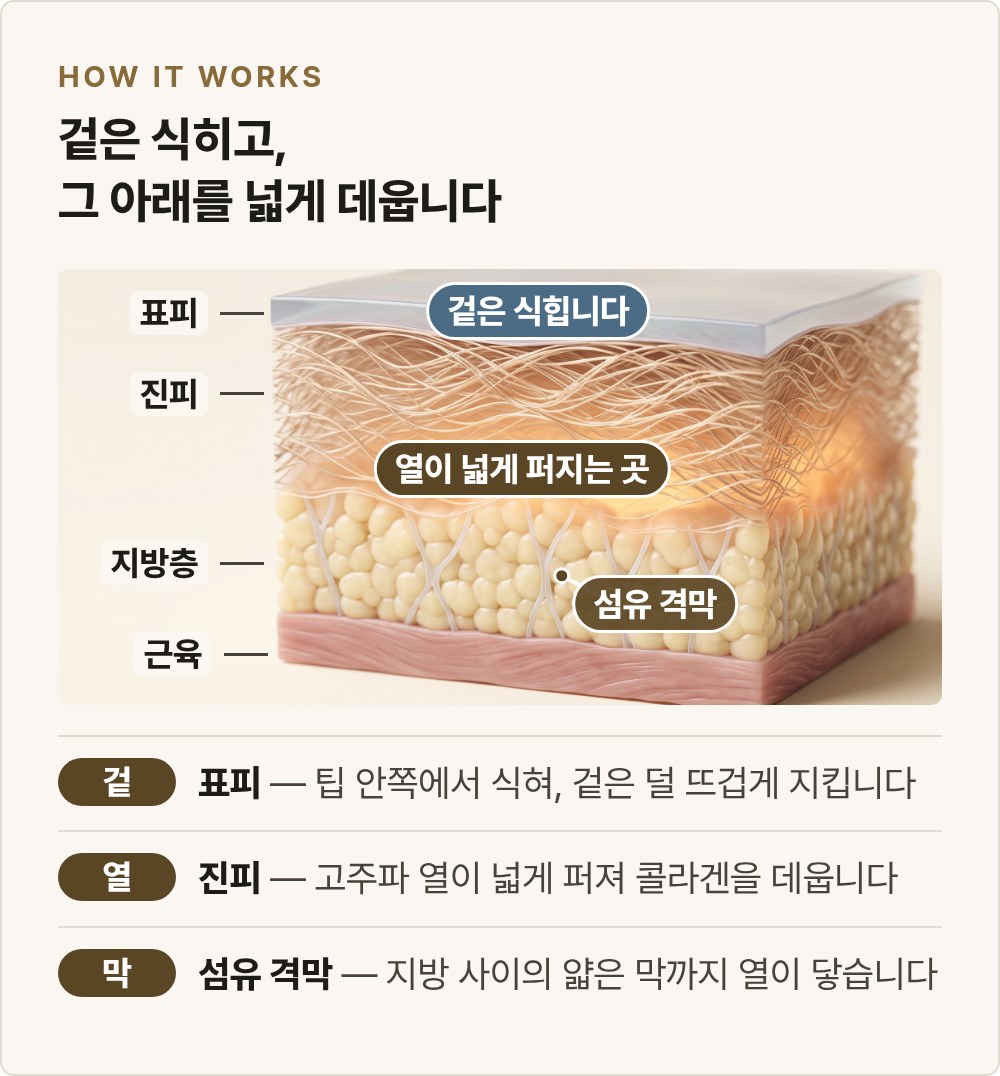
This is an illustrative image. The thickness of skin and fat varies from person to person and from one area of the face to another.
To keep the skin surface from overheating, coolant is sprayed from inside the tip to cool it. The coolant does not come into direct contact with the skin. Cooling continues before, during, and after the heat is delivered. The tip also produces vibration at the same time. The manufacturer explains that the vibration is built in to help reduce discomfort.
Cool the surface, and broadly heat the dermis beneath it.
3. What Happens to Heated Collagen — Right After and Months Later
Collagen in the dermis shrinks slightly on the spot when heated. This is why some people feel their skin tightening right after treatment.
The body treats the heated area as a minor injury and begins to heal. Studies explain that new collagen is formed during this process. In a Korean study that examined skin tissue from 11 people at 2 and 6 months after treatment, the collagen fibers also became denser.

This illustrative image is based on the manufacturer’s guidance and research. The degree and timing of change differ from person to person.
For this reason, the manufacturer says changes do not happen all at once but unfold over 2 to 6 months. Most studies also followed patients for up to 6 months after treatment, and we found no study that compared treated and untreated areas beyond six months. The changes seen in studies were generally mild to moderate. This is not a procedure that dramatically transforms the face the way surgery does.
How long the changes last depends on your skin condition and how fast you age. Skin aging continues as you get older. The commonly cited figure of “1 to 2 years” is addressed separately in the FAQ below.
The results show up months later, not on the day of treatment.
4. Tips and Shots — Different Tips Are Used for the Face and the Eye Area
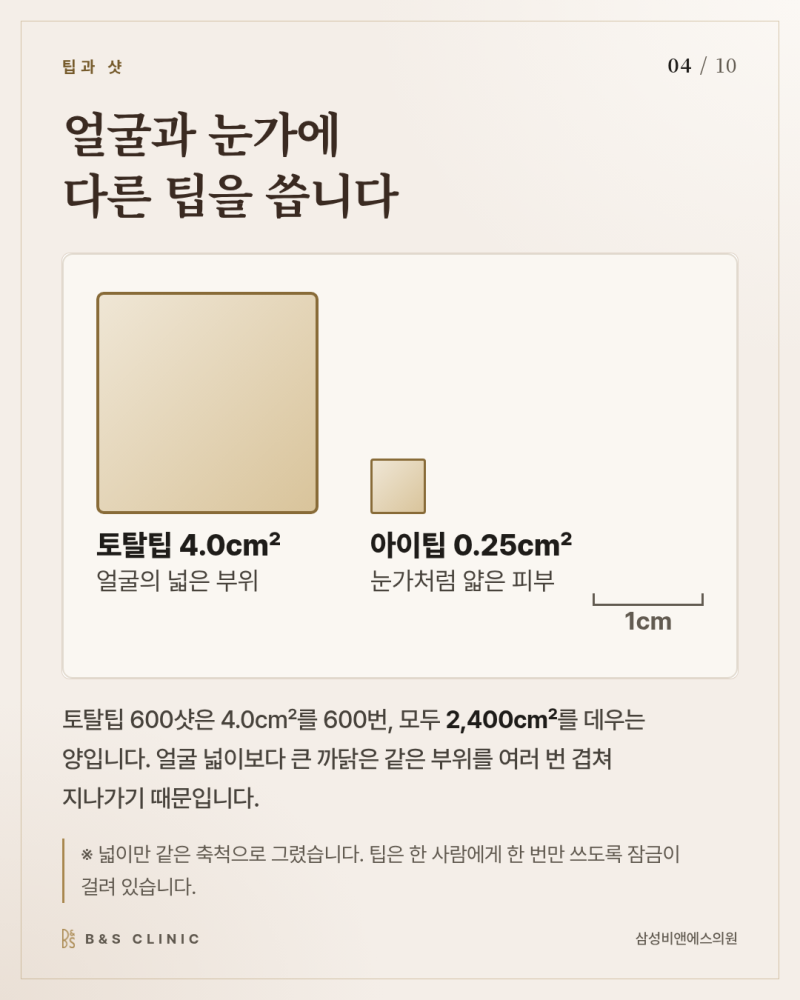
Thermage uses different tips depending on the area. A Total tip (4.0 cm²) is used for broad areas of the face, and an Eye tip (0.25 cm²) is used for thin skin such as around the eyes.
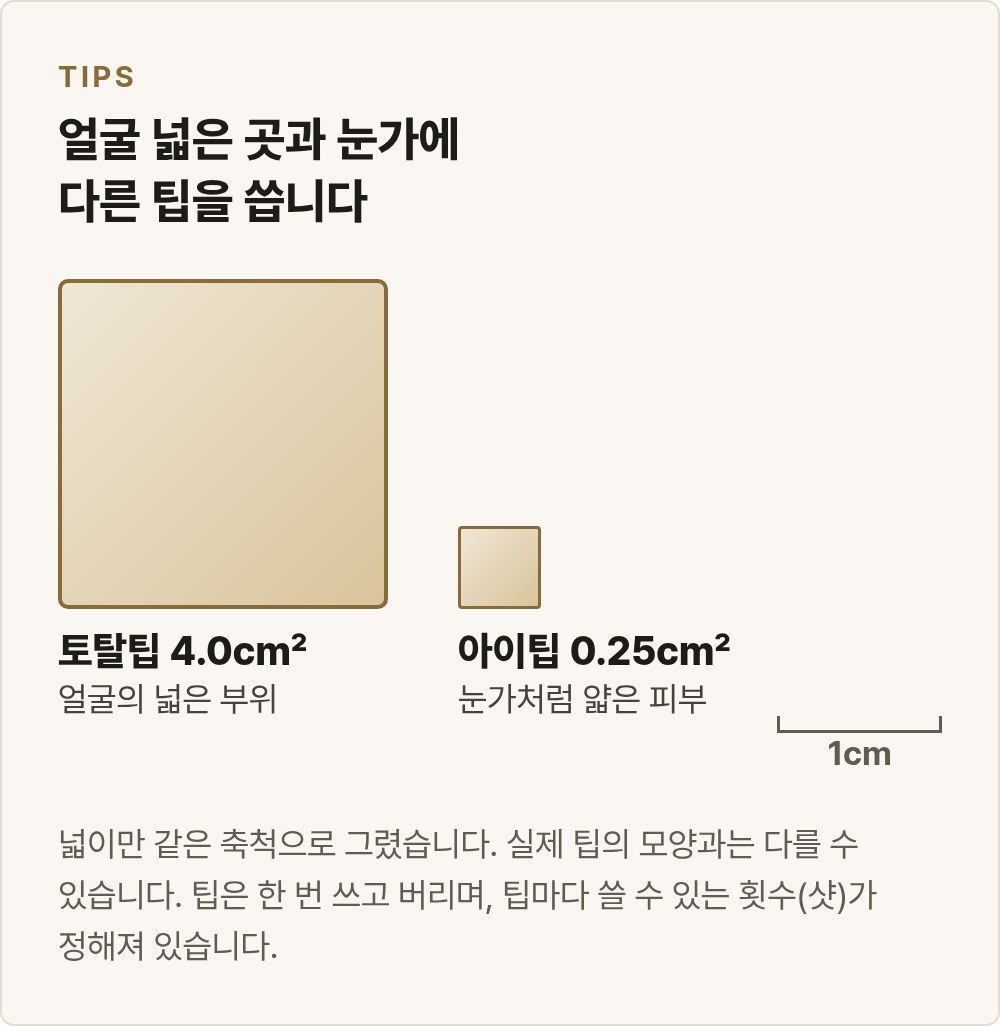
The two tips are drawn to the same scale to compare their sizes.
Each time the tip is placed on the skin to deliver energy is called one shot. Each tip is locked for use on one patient only, and each has a set number of shots it can deliver. According to the manufacturer’s data, Total tips come in 300-, 600-, and 900-shot versions, and Eye tips come in 225- and 450-shot versions.
Before treatment, a grid pattern is marked on the skin to divide it into zones. The tip is moved one square at a time along the grid as shots are delivered.
A 600-shot Total tip covers 4.0 cm² across 600 shots, which adds up to 2,400 cm² in total. The total is larger than the area of the face because the same area is passed over multiple times, not just once. A consensus paper by physicians who work with Thermage recommends passing over the area 2 to 4 times at a moderate intensity. In a survey of Korean dermatologists, many said they use the 600-shot Total tip.
The number of shots is determined by looking at skin thickness and the treatment area. When you receive a price quote for Thermage, please also confirm which tip will be used and how many shots are planned.
5. Who Is a Good Candidate? — Look at Your Skin, Not Just Your Age
Whether Thermage is right for you is not determined by age alone. A consensus paper by eight physicians who work with Thermage considers skin condition more important than chronological age. During consultation, three factors are examined.
What We Check 01 / 03 · Type of Concern (CONCERN)
First, we check whether the wrinkles are around the eyes or across a broader area of the face. The approved use in Korea is for wrinkles around the eyes and on the face. Studies have mainly focused on people whose skin is just beginning to sag, mildly to moderately. Because physicians’ consensus is that results are hard to predict for deep sagging, other options such as thread lifting are also compared.
What We Check 02 / 03 · Skin Thickness and Condition (SKIN)
In a survey of physicians across several Asia-Pacific countries, skin thickness was identified as a major factor in determining response. For the eye area, thin skin was cited as a factor predicting good results. Some physicians also believe results may be better in skin that has less collagen damage from sun exposure or acne scars than in skin with heavily damaged collagen.
What We Check 03 / 03 · Expected Results (EXPECTATION)
In the same survey, the age group most frequently cited was the 40s. However, the consensus paper by eight physicians holds that people over 65 can still benefit. Conversely, some people see little change. No criteria have been established through research to predict in advance who will see a major change. Thermage is a better fit if you expect mild-to-moderate changes that develop over several months.

The three points reviewed during consultation are summarized at a glance.
If hollowing is your main concern, we compare options with filler or other volume-restoring treatments. When the skin is already red and warm, as right after a laser treatment, we do not perform Thermage on the same day.
Your current skin thickness and concerns matter more than your age.
6. Ulthera vs. Thermage — How the Energy Reaches the Skin
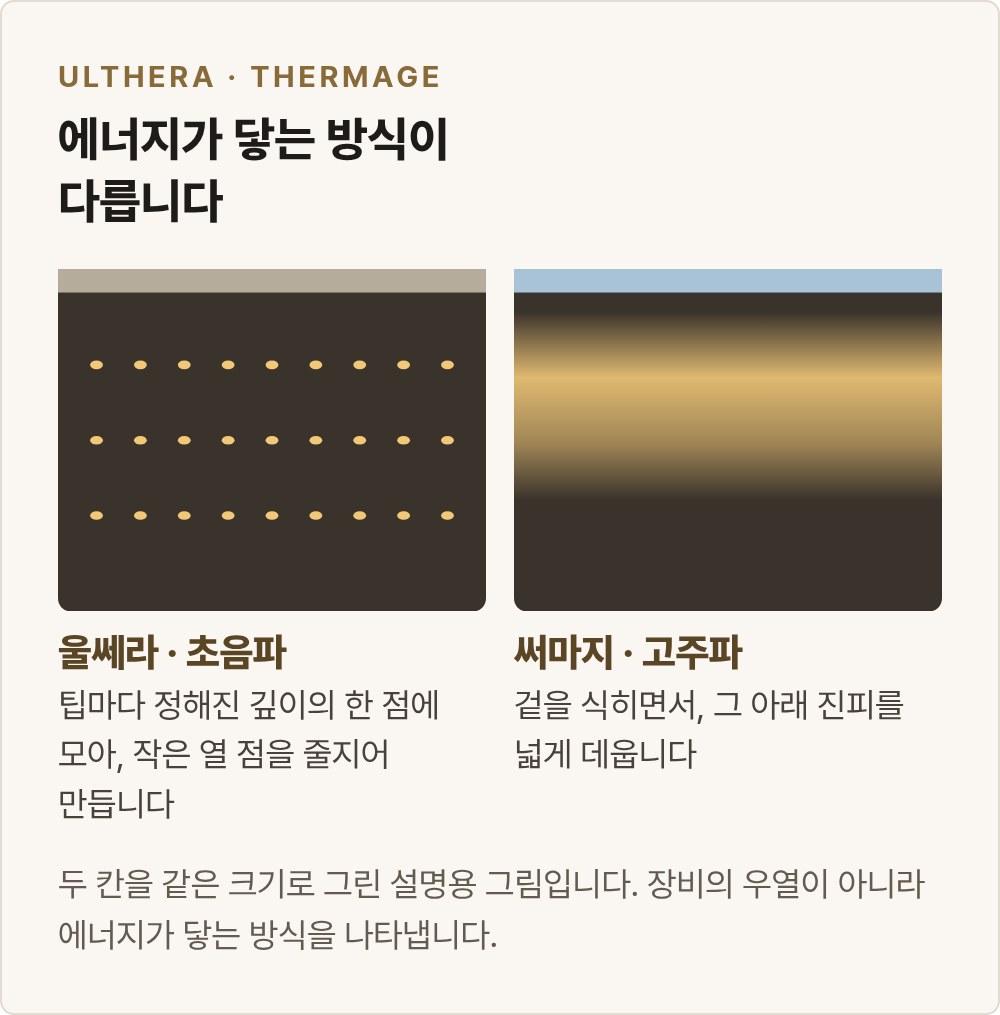
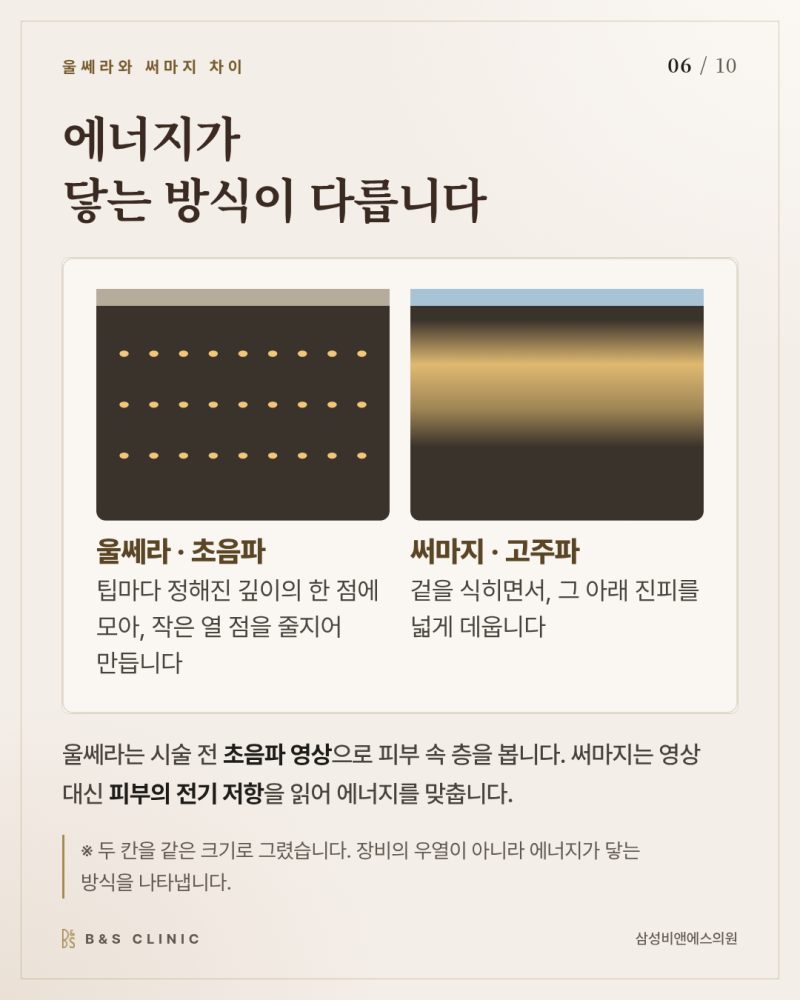
Ulthera and Thermage are often mentioned together, but they use different types of energy. Ulthera focuses ultrasound at a single point at a fixed depth determined for each tip, creating a row of small heat points. Thermage uses radiofrequency to broadly heat the dermis beneath the skin while cooling the surface.
This illustration shows, side by side, how the energy from Ulthera and Thermage reaches the skin beneath the surface.
With Ulthera, the skin layers are checked on the ultrasound imaging screen before treatment. Thermage has no such imaging display. Instead, the device reads whether the tip is making good contact with the skin and the skin’s electrical resistance, and adjusts the energy accordingly.
A Korean tissue study comparing the two methods also found that ultrasound produced changes concentrated in one area, while radiofrequency produced changes spread more broadly. Which device to use, or whether to use both, is decided after examining the face in person.
7. When Treatment Is Not Recommended, or When You Need to Tell Us First
Treatment is not performed if you have an implanted electronic device in your body, such as a pacemaker or implantable cardioverter-defibrillator. As explained in Section 2, the radiofrequency current travels through the body to the pad, so it may interfere with such devices.
Please be sure to tell us about the following during your consultation: if you are pregnant or breastfeeding, if you have had filler injections in the area to be treated, or if you have semi-permanent makeup or tattoos. Please also let us know if you have diabetes, an autoimmune disease such as lupus, or epilepsy, and if you have ever had herpes blisters around the mouth or genitals.
The manufacturer notes that Thermage has “not been studied” in these cases. For that reason, we decide separately whether to proceed based on your face and overall health. When treating near the eye (inside the bony rim of the eye socket), a plastic eye shield is placed to protect the eye. Please do not stop any medications you are taking on your own; let us know first.
8. How the Treatment Proceeds
Step 01 / 04 · Consultation (CONSULT)
The director physician examines your face in person to assess the location of wrinkles, skin thickness, and the degree of sagging. The treatment area, tip, and number of shots are determined at this stage. We will also ask about any medications you take, previous treatments, and any implanted devices.
Step 02 / 04 · Preparation (PREPARE)
Your face is cleansed and a topical anesthetic cream is applied. The return pad is attached to your body, and a grid pattern is marked on the skin to be treated.
Step 03 / 04 · Treatment (SHOT BY SHOT)
Following the grid, the tip is moved one square at a time as shots are delivered. Each shot follows a sequence of cooling the skin surface, delivering heat, and cooling again. Energy is adjusted while we check how hot it feels to you.
Step 04 / 04 · Aftercare (AFTER)
The grid markings are wiped off and your skin is checked. Some redness or warmth may remain. We will guide you on post-treatment care.
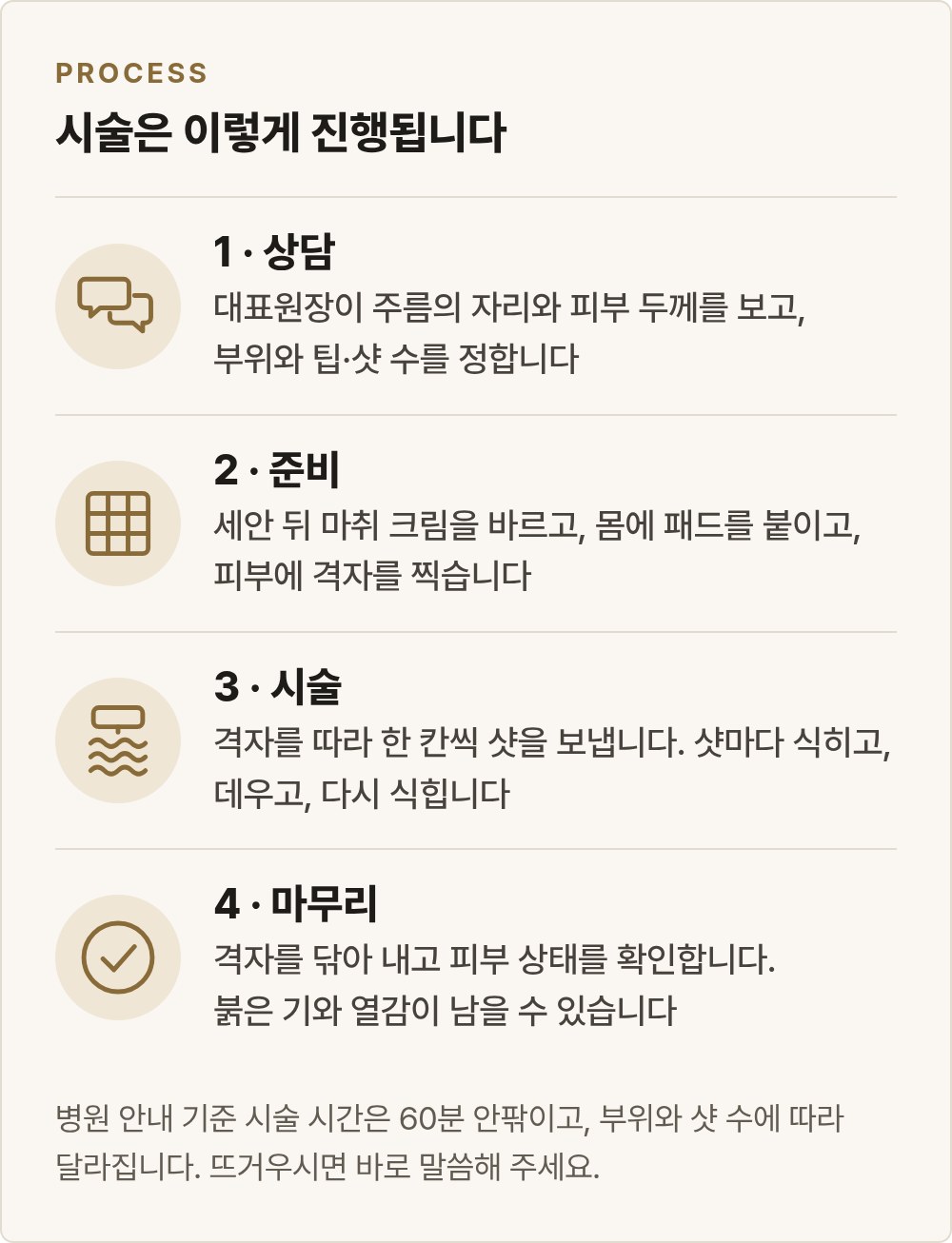
The treatment steps are summarized at a glance.
According to the clinic’s guidance, the treatment takes about 60 minutes. The time varies depending on the area and the number of shots.
You may feel heat with each shot during treatment. The manufacturer notes that mild to moderate pain is the most commonly reported reaction during treatment. However, one Thermage FLX study found that participants rated their pain at an average of 6 to 7 out of 10, even after cream anesthesia. How much you feel varies from person to person. The manufacturer advises adjusting the energy in discussion with the medical team to a level that is “slightly hot but tolerable.” If it feels too hot, please don’t hold back. Tell us right away.
9. Post-Treatment Reactions and How to Care for Your Skin
The post-treatment reactions described by the manufacturer are as follows. Most appear briefly and then subside, but knowing about them in advance can help reduce surprise.
· Redness — Mild redness may occur and usually subsides within 24 hours.
· Swelling — Usually subsides within 5 days, but may last for several weeks.
· Bruising and hives — These may occur.
· Lumps — Small lumps under the skin may form, mainly on the neck, and usually resolve within 1 to 2 weeks.
· Sensory changes and temporary paralysis — You may feel tingling or a prickling sensation, or part of your face may become temporarily paralyzed and unable to move. These usually pass quickly but can last for several weeks.
· Eye symptoms — Dry eyes, blurred vision, or corneal abrasions (scratches on the cornea, the clear front surface over the iris) after treatment of the eye area have been reported in physician surveys.
· Burns and blisters — If the upper layers of the skin overheat and cause a burn, blisters and scabs may form, and scarring may remain.
· Uneven appearance — The skin surface may look uneven, and this may appear more than one month after treatment.
· Darkening of skin tone — The skin may become darker and usually returns to normal within a few months.
· Herpes blisters — Herpes outbreaks may rarely flare up again around the mouth or genitals.
Please contact the clinic right away if you notice any of these changes: a blister or burn-like wound at the treated area, pain or swelling that keeps getting worse, skin that looks sunken or uneven, tingling or numbness that persists, eye pain or blurred vision, herpes blisters, or any symptom you have never experienced before.
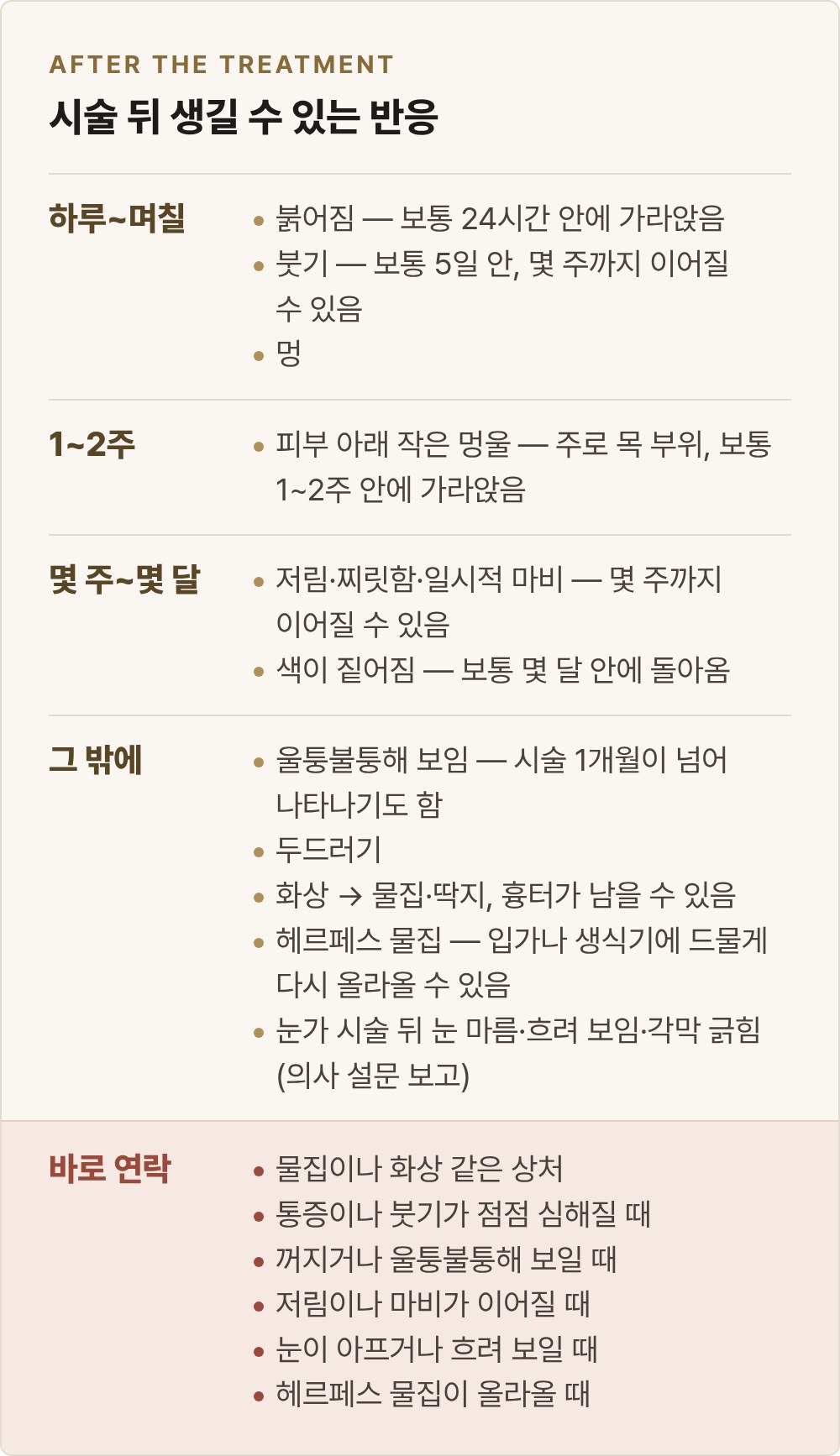
A summary of post-treatment reactions and when to contact us right away.
The manufacturer states that no special aftercare is required. However, for about one week, please avoid activities that add heat to the skin, such as saunas, jjimjilbang (Korean bathhouses), and intense exercise that causes heavy sweating. It is also best to avoid heavy drinking and smoking. When washing your face, do not scrub harshly with exfoliating products. Apply sunscreen and moisturizer every day.
Frequently Asked Questions
Q. How many millimeters deep does Thermage heat reach?
Unlike Ulthera, Thermage is not a device that sets a specific depth in millimeters for each tip. The manufacturer explains that radiofrequency heat is delivered to the dermis and to the thin membrane (fibrous septa) between the dermis and the fat layer beneath it. So saying it reaches “only the dermis” is only half true. However, the depth the heat reaches varies with the size and shape of the tip, and the Eye tip heats more shallowly. The thickness of skin and fat also differs from person to person and from area to area.
Q. My face is on the slim side. Could my cheeks become hollow?
It is not impossible. The manufacturer notes that the skin surface may look uneven after treatment, and this may appear more than one month later. In earlier device studies and in a 2026 survey of Asia-Pacific physicians, cases were reported where fat loss made the area look sunken. How often this happens is unknown. The manufacturer also notes that responses vary depending on skin thickness and the distribution of facial fat. If your face is on the slim side, please be sure to mention it during consultation.
Q. What is the difference between results lasting “1 to 2 years” and getting treated “every year”?
“1 to 2 years” is a phrase used by the US manufacturer. We did not find any study that followed patients over 1 to 2 years for comparison, and most studies followed patients only up to 6 months after treatment. “Every year” is the answer most often given in two physician surveys that asked about the interval for re-treatment (51.9% and 67.2%). These figures do not measure how long the changes last. According to the clinic’s guidance, treatment once every 1 to 2 years is recommended, and the actual timing is decided by looking at your skin condition. Comparative studies have not confirmed whether annual treatments build up results.
Q. Can I receive treatment while sedated and asleep?
Thermage mainly uses a topical anesthetic cream. A consensus paper by physicians who work with Thermage notes that the manufacturer does not recommend sedation or nerve-blocking injection anesthesia. During treatment, you need to tell us how hot it feels so the medical team can adjust the energy. If you cannot sense the heat, the risk of side effects such as burns can increase. If it feels hot, please tell us right away.
Q. Is it helpful to take photos before treatment?
Yes, it is. In the studies, physicians who were blinded to which side had been treated compared photos taken before treatment with photos taken several months later to measure changes. If you decide which areas concern you and keep photos from before treatment, you can take photos using the same method 2 to 6 months later and compare them.
What to Consider Before Treatment
At Your Consultation
What We Will Ask First
· Concern — Which comes first: fine lines, sagging, or hollowing
· Area — Around the eyes, or a broader area of the face
· Skin thickness — Whether your skin is thin, or whether you have more facial fat
· Previous treatments — Areas and timing of any Thermage, Ulthera, or filler treatments
· Health status — Implanted electronic devices, pregnancy or breastfeeding, and current medications
· Schedule — Whether you have important events coming up, considering swelling and bruising
At Samsung BNS Clinic, the director physician consults with you first, rather than a consultation manager. After examining your face in person, we decide together whether to proceed and how.

Dr. Sohyun Park, Director, Samsung BNS Clinic
If You Are Considering Thermage
You do not need to decide on a treatment right away.
Thermage uses heat to change the collagen under the skin, so results appear months later rather than on the day of treatment, and they vary depending on skin thickness and condition.
After examining your face in person, we will explain whether Thermage is right for you, which tip and how many shots would be used, whether other options should be considered, and what to watch for after treatment.
Consultation and Booking Information
Request a Consultation | Samsung BNS Clinic official consultation request formYou can submit a consultation request to Director Dr. Sohyun Park. |
Phone | 02-501-4341Office hours may vary by day, so please call to confirm before your visit. |
KakaoTalk | |
Directions | 9th Floor, Samheung Building II, 514 Teheran-ro, Gangnam-gu, Seoul 5-minute walk from Exit 4, Samseong Station, Line 2 |
Website | |
Related Information |
#Thermage #ThermageFLX #RadiofrequencyTreatment #Ulthera vs Thermage #EyeWrinkles #FacialWrinkles #SamseongStationDermatology #DrSohyunPark
Advertisement