2026-11-09
Juvgen for Deep Glabellar Lines: Is Botox Enough? Differences Between Forehead and Nose-Bridge Botox
Dr. Park So-hyun of Samsung BNS Clinic explains how Juvgen targets glabellar wrinkles already set into the skin, while Botox relaxes the muscles that cause them.
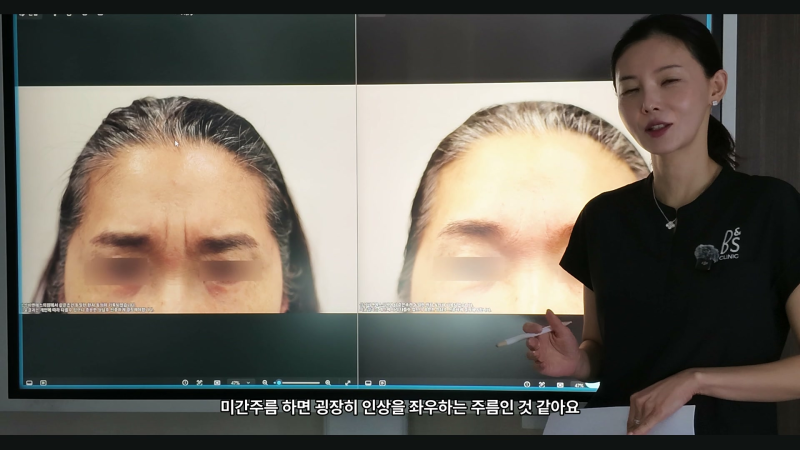
a. Glabellar lines form through repeated muscle contraction and can develop into static wrinkles that remain deep even at rest.
b. Glabellar Juvgen is considered for improving wrinkles that have already formed, while Botox temporarily relaxes muscle movement.
c. Glabellar line treatment should be planned only after a comprehensive assessment of wrinkle depth, skin condition, muscle movement, and the surrounding blood vessel structure.
Hello, I am Dr. Park So-hyun, director of Samsung BNS Clinic.
The glabella is one of the areas that most shapes how a face appears. When deep wrinkles settle between the brows, a person can look stern or intense even when they are not particularly angry or tired.
In particular, if the lines between the brows remain clearly visible without any frowning, it is not enough to look only at muscle movement. The condition of the skin wrinkles that have already formed also needs to be examined.
Many people consider Botox for glabellar lines, but not all wrinkles develop from the same cause.
Today, using the case of a patient whose deep glabellar lines were visible even at rest, I will explain how the roles of Juvgen and Botox differ.
1. Why Deep Glabellar Lines Change How You Look
The glabella is an area that moves repeatedly when we make facial expressions. When lines carve deeply between the brows, a person can look angry or exhausted, giving off a fatigued impression.
In fact, some patients who visit our clinic about glabellar lines have already received Botox several times in the past.
However, glabellar lines do not all look the same. Some appear only when making an expression, while others remain clearly visible even when the face is relaxed.
Therefore, when evaluating glabellar lines, we need to check not only how deep the wrinkles are but also how they change with facial expressions.
2. What Are Static Wrinkles, the Glabellar Lines That Persist at Rest?
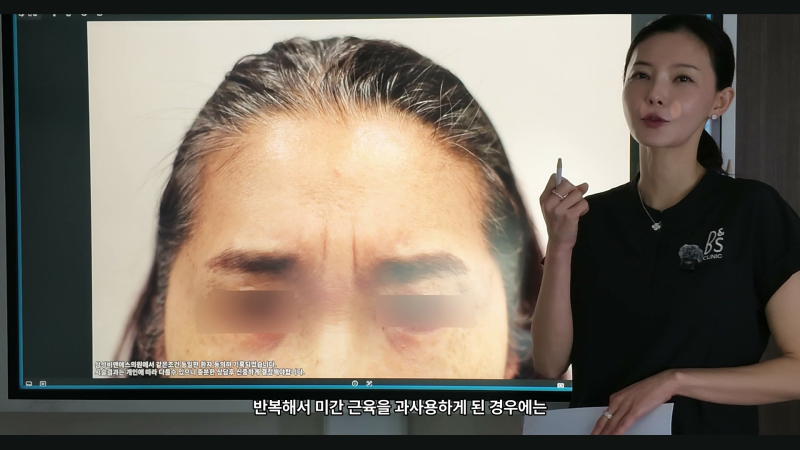
Glabellar lines are not caused simply by dry skin. Repeated contraction of the muscles around the glabella can form wrinkles in the skin.
In the early stages, lines appear only when frowning. However, if this movement repeats over a long period, the lines can remain even after the expression is relaxed.
Wrinkles that remain even when the muscles are not moving are called static wrinkles.
Static wrinkles should be distinguished from dynamic wrinkles that appear only at the moment the muscles move. Deeply established glabellar lines may not be sufficiently addressed by reducing muscle movement alone.
In such cases, the treatment direction is determined by considering both the skin condition and how far the wrinkles have developed.
3. A Case of Deep Glabellar Lines in a Patient With No Prior Botox
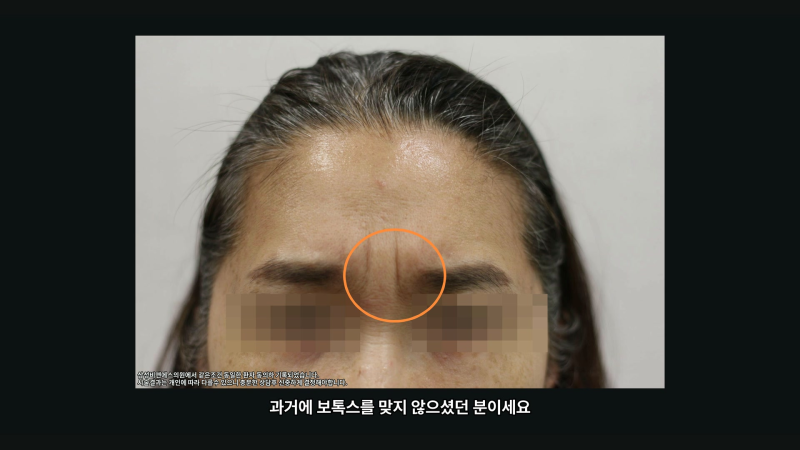
The patient featured in this case traveled from overseas and had never received Botox before.
The patient had been bothered by the lines between their brows and visited Samsung BNS Clinic to improve them.
Pre-treatment photos show deep lines between the brows even with a neutral expression, without any frowning.
When wrinkles remain clearly visible even at rest, it is necessary to examine the condition of the dermis as well as muscle movement.
In this case, Juvgen was performed after considering the condition of the glabellar lines that had already formed.
However, this treatment plan was based on this patient’s condition and does not apply the same way to every case of glabellar lines.
4. Why Juvgen Is Considered for Deeply Established Glabellar Lines
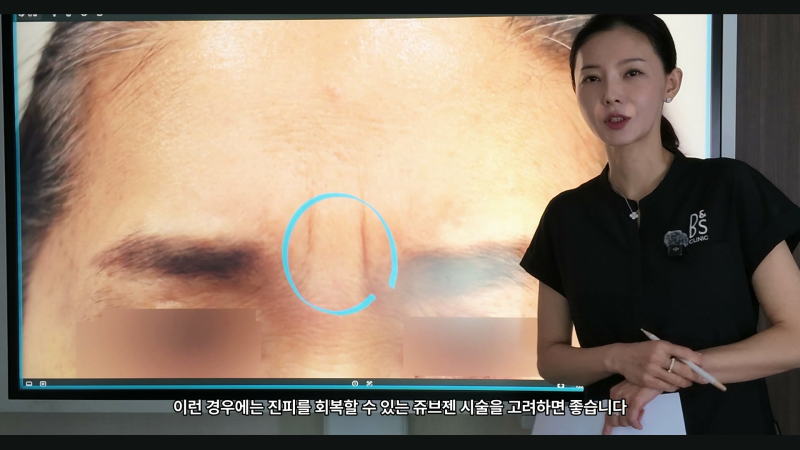
Juvgen is a procedure aimed at improving wrinkles by targeting the dermal layer of the skin.
When glabellar lines are deeply established, reducing muscle movement alone may not be enough to improve the wrinkles that have already formed.
In these cases, the condition of the skin tissue where the wrinkles have formed is evaluated, and a treatment such as glabellar Juvgen may be considered.
The important point here is that having glabellar lines does not mean every patient needs Juvgen.
The appropriate treatment direction should be decided after checking wrinkle depth, skin condition, and previous treatment history.
5. Is Botox Still Needed After Glabellar Juvgen?
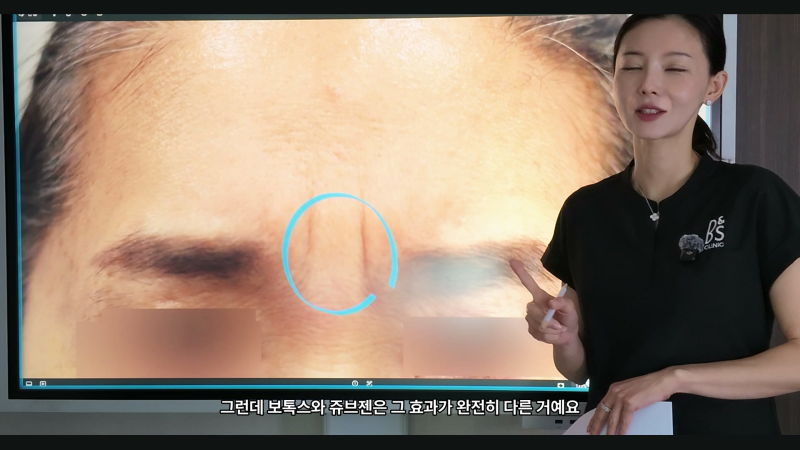
People considering glabellar Juvgen often ask the following question.
“If Juvgen improves my glabellar lines, do I no longer need Botox?”
To answer this question, we first need to distinguish the roles of the two treatments.
Botox temporarily relaxes the muscle movement that creates glabellar lines. By reducing repeated muscle contraction, it is used to soften the wrinkles that form when making expressions.
Juvgen, on the other hand, is a procedure performed to improve skin wrinkles that have already set in.
In short, Botox focuses on the muscle movement that creates the wrinkles, while Juvgen focuses on the wrinkled area that has already formed.
When I plan a glabellar Juvgen treatment, I also carefully consider whether to combine it with Botox. However, Botox is not essential for every patient, and whether to combine the two should be decided based on glabellar muscle movement and wrinkle condition.
Forehead Botox and nose-bridge Botox are also treatments that must account for where the wrinkles appear and how the muscles move. When considering botulinum toxin products such as Xeomin, it is also necessary to check the product’s characteristics, the treatment area, and the individual’s condition.
However, this case does not mean that forehead Botox, nose-bridge Botox, or Xeomin was actually used. The key point of this case is the difference in roles between Juvgen for deeply formed glabellar lines and Botox.
6. Why Blood Vessels Matter in Glabellar Juvgen Treatment


The glabella is an area where the anatomical structure must be carefully checked during treatment.
In particular, blood vessels extend around the eyes, so the course and depth of vessels in the treatment area must be taken into account.
For this reason, in procedures aimed at improving glabellar lines, it is not enough to look only at the wrinkles visible on the skin surface. Practitioners must also carefully examine the position of internal tissues and blood vessels.
Because of this structural characteristic, the glabella requires caution in both treatment planning and execution. Before treatment, it is important to review not only the expected results but also possible side effects and precautions.
7. Skin Condition and Follow-Up Right After Juvgen Treatment
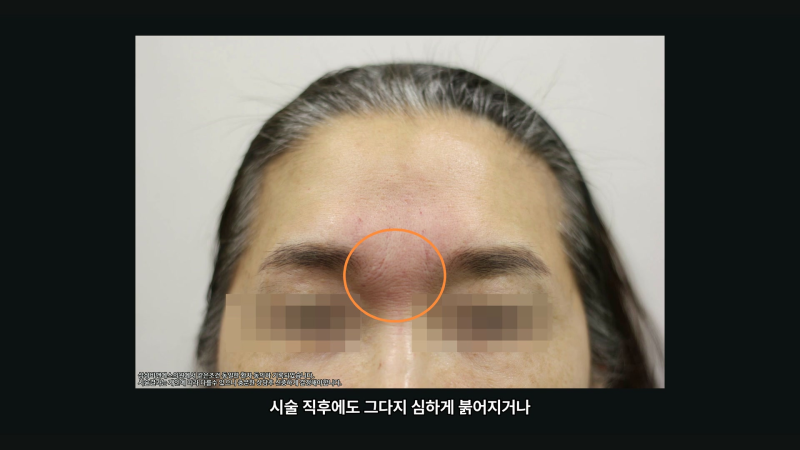
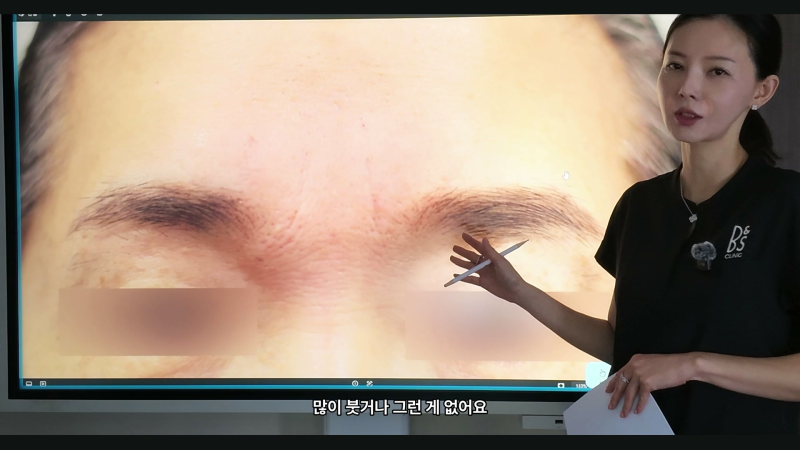
In this patient’s photos taken right after Juvgen treatment, redness or swelling in the glabellar area was not very noticeable.
However, this reflects what was observed immediately after this patient’s treatment and does not necessarily apply to everyone.
After Juvgen treatment, redness, swelling, or bruising may occur depending on each person’s skin condition and the treated area.
Therefore, rather than judging the final results from photos taken right after treatment, it is important to also review skin condition and progress over time.
It is important to distinguish between how the skin looks immediately after treatment and how it looks after some time has passed.
8. What Matters Most in Glabellar Line Treatment: Cause and Condition of the Wrinkles
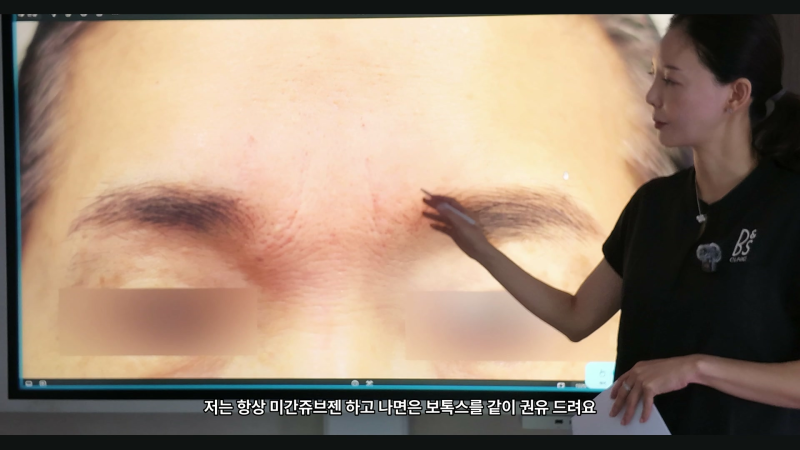
When managing glabellar lines, it is important to distinguish between repeated muscle movement and skin wrinkles that have already formed.
Botox is used to relax contraction of the glabellar muscles, while Juvgen may be considered to improve deeply established wrinkles.
Because the two treatments act on different targets and have different goals, the treatment direction may vary depending on each patient’s wrinkle condition.
In particular, when glabellar lines remain deep even at rest, a treatment plan should be made only after a comprehensive assessment of both skin and muscle condition.
When evaluating glabellar lines, it is not enough to check only how deep the wrinkles are. The cause of the wrinkles, skin condition, and anatomical structure should all be considered together.
This was Dr. Park So-hyun, director of Samsung BNS Clinic.
You can find Dr. Park So-hyun’s clinical perspective on glabellar lines and other skin treatments, along with related information, on the official blog below.
For a more detailed explanation of glabellar lines that persist at rest, why Juvgen is considered, whether to combine it with Botox, and the blood vessel structure of the glabella, please watch Dr. Park So-hyun’s original video.
Frequently Asked Questions
Is glabellar Juvgen a treatment for glabellar lines that have already formed?
Yes. The article explains that glabellar Juvgen is considered for improving wrinkles that have already formed. Juvgen targets the dermal layer of the skin, and it is not needed for every glabellar wrinkle. The decision is made after checking wrinkle depth and skin condition.
How do Botox and glabellar Juvgen differ in their roles?
Botox temporarily relaxes glabellar muscle movement, while glabellar Juvgen aims to improve wrinkles that have already settled into the skin. Botox targets the muscles that create the wrinkles, while Juvgen focuses on the area where the wrinkles have already formed.
Do I still need Botox after glabellar Juvgen?
Not necessarily. Botox is not required for every patient. Whether to combine the two should be decided based on glabellar muscle movement and wrinkle condition. Because the two treatments act on different targets, the article explains that their roles should be distinguished first.
What are the glabellar lines that remain at rest?
These are called static wrinkles, meaning lines that remain even when the muscles are not moving. They can develop when repeated muscle contraction continues over a long period. The article notes that reducing muscle movement alone may not be sufficient to address them.
Why are blood vessels considered in glabellar treatments?
Blood vessels extend around the eyes, so the course and depth of vessels in the treatment area must be considered during treatment. The article explains that practitioners should examine not only the wrinkles on the skin surface but also internal tissues and vessel positions.
Can redness or swelling occur after Juvgen treatment?
Yes. Depending on each person’s skin condition and the treated area, redness, swelling, or bruising can occur. The patient featured in the article showed no notable redness or swelling immediately after treatment, but this does not apply to all patients.